
POLYGONAL THEORIES
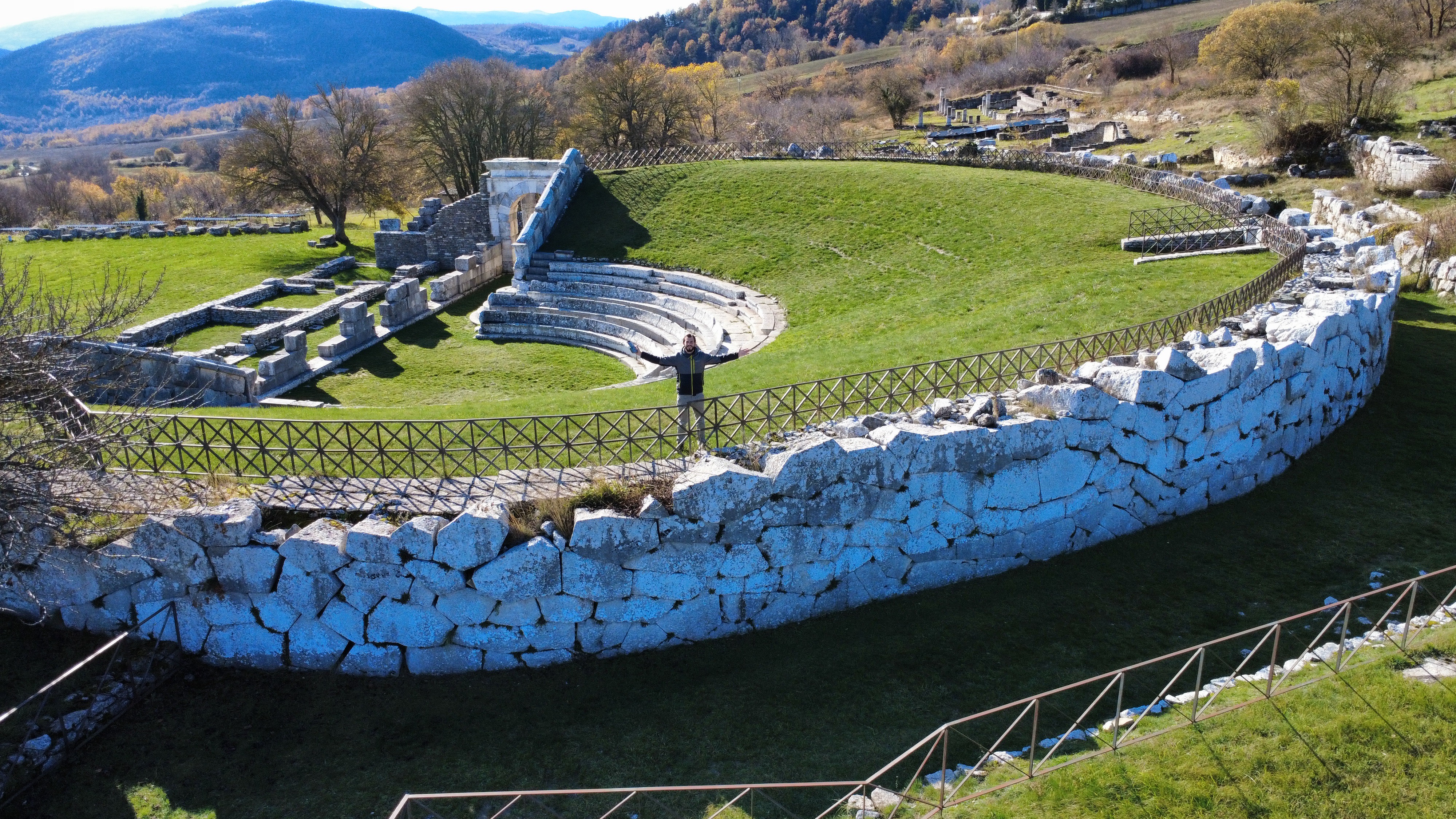
IF THE WALLS COULD TALK WHAT STORIES WOULD THEY TELL?
The widespread nature of polygonal walls inspires a serious reevaluation of their origins. The walls themselves are steeped in ancient myth and legend and often lie at the foundations of religious or politically important structures. What inspired such difficult stonework to be completed, in many cases as the theory goes by small scale groups of people in isolated areas? Are we expected to believe that such similar craftmanship was developed independently in far-flung corners of the world?
This page summarizes the various theories, their evidence and evaluates the strength of those claims. The rest is up to you to contemplate and decide.
Cyclops (Bronze Age) Theory
The work of @One-eyedgiantbuildingwall (X and YouTube) will catch you up on his proposed claims. The One-Eyed Giant presents his case quite compellingly over the course of an exhaustive catalogue of videos. In short, a Bronze Age culture spanning the Mediterranean arose in the wake of the 4.2-kiloyear event and gradually developed the fascinating stonework we know today as Cyclopean masonry.

Late Glacial Interstidial (44th Parallel) Theory
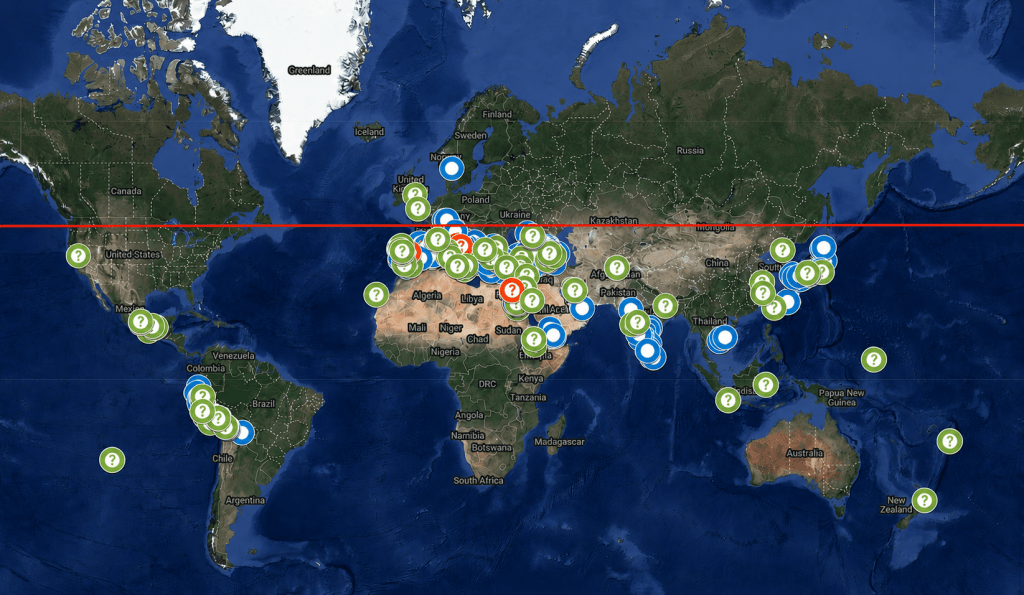
There appears to be an overwhelming tendency for polygonal masonry sites worldwide to occur south of the 44th parallel north. While there are a select few exceptions, this pattern raises an interesting question: why would such an apparent geographic boundary exist when regions well north of this latitude have supported human habitation for millennia, including since the end of the last Ice Age (roughly 12,000 years ago)?
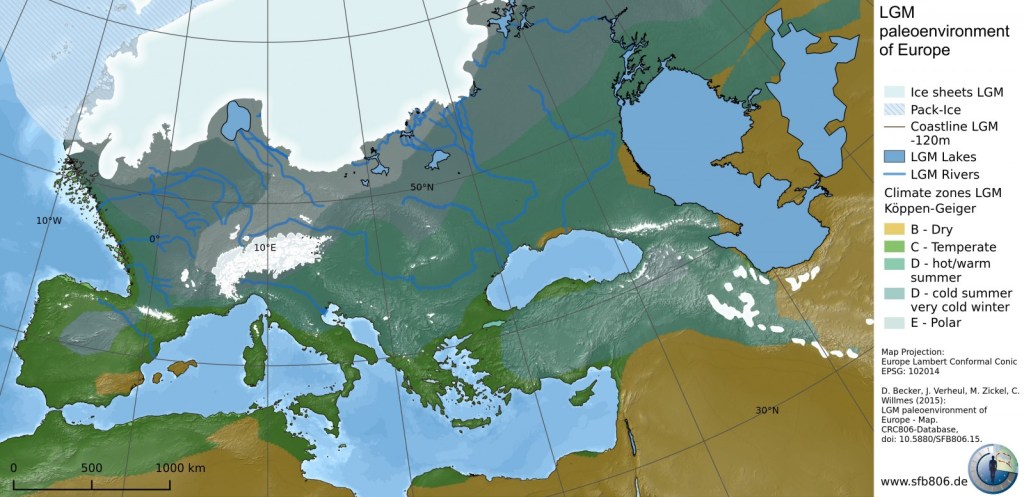
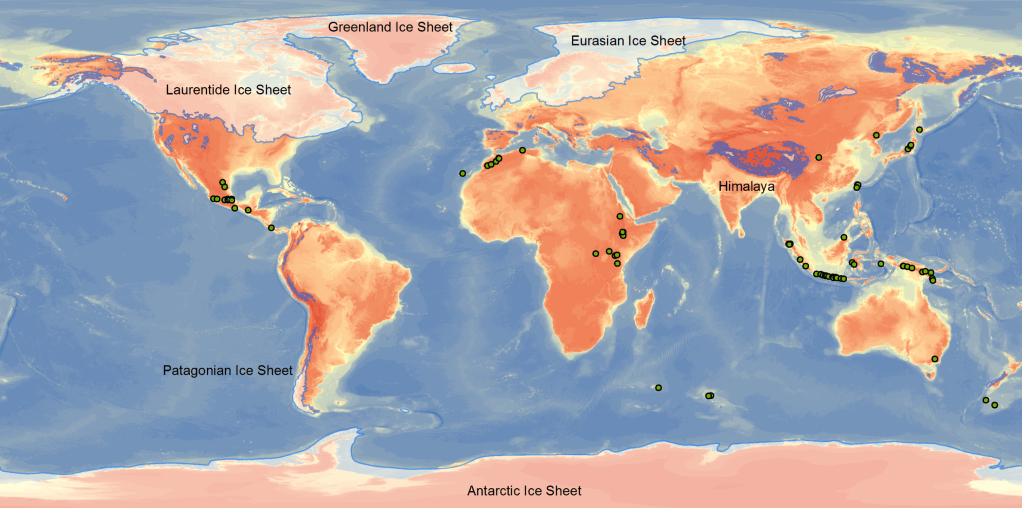
One possible explanation looks further back to the Last Glacial Maximum (c. 26,000–20,000 years ago), when global climate conditions differed dramatically from today. Under this hypothesis, the 44th parallel may have represented not a strict boundary but a broad climatic transition zone. In present-day North America and Europe, areas near this latitude lay between the expanding Laurentide and Eurasian ice sheets to the north and comparatively less glaciated territory to the south. In parts of Asia, conditions north of this zone were often colder, drier, and more exposed to severe winds than regions farther south.
If environmental conditions influenced long-term patterns of settlement and cultural development, it is conceivable that traditions associated with large-scale megalithic construction emerged more successfully in these southern regions. Proponents of this idea point to the broad distribution of polygonal and megalithic architecture across parts of the Mediterranean, Middle East, Southeast Asia, Japan, and South America. The smaller number of examples found north of this latitude may reflect later periods of climatic improvement following the Last Glacial Maximum. One possible candidate is the Late Glacial Interstadial (c. 14,700–12,900 years ago), a period associated with relatively rapid warming and retreating ice sheets. Under this interpretation, populations previously concentrated farther south gradually expanded into newly habitable areas.
This hypothesis further proposes that major climatic disruptions beginning with the Younger Dryas and continuing into the early Holocene contributed to the fragmentation or disappearance of these traditions, with elements potentially surviving only in isolated regions before later civilizations emerged.
Peru and Easter Island Theory
The similar stonework seen between sites in Peru and Easter Island suggest that contact was made before Spanish arrival and European discovery of the island. A few notable Ahu pedestals on Easter Island share the same precisely fit stonework as that seen at many sites in Peru. The most famous of these pedestals is Ahu Vinapu. Additionally, despite being smaller, the Purunmachus, monumental sarcophagi created by the ancient Chachapoya culture in Peru, slightly resemble the more famous Easter Island Moai statues. It is thought that the Incans or an even older culture frequented the island and built similar structures before the Polynesian arrival.
Island Theory
Islands often contain the oldest and most well preserved examples of polygonal structures. This theory proposes that a skilled maritime culture sought the protection and isolation of the world’s islands to build their megalithic works, possibly after a series of natural disasters, climate change, conflict or a combination of all three forced them away from the mainland. The most frequently cited examples of this island-based culture are Malta’s megalithic builders, the Nuragic culture of Sardinia, the Balearic Island’s Talaiotic peoples, Easter Island’s famous Moai and pedestals, and the massive polygonal walls of Japan and Okinawa.
ADDITIONAL LINES OF EVIDENCE FOR FUTURE DISCOVERY
LIDAR Scanning & Photogrammetry – tools used in archaeology to document and analyze ancient sites. While LiDAR measures exact distances using lasers to map terrain and structural geometry, photogrammetry stitches overlapping 2D photographs to create highly detailed, photorealistic 3D models. Together, these technologies have the ability to discover and map sites like never before, and along the way, they may find clues that link sites across the globe.
Relative Erosion Method (REM) – dating technique developed by Italian engineer Alberto Donini to estimate the age of ancient stone structures. Based on the ratio between the erosion of two surfaces of the same type of rock in the same location—one with a known date and another whose age needs to be determined.
Thermoluminescence Dating (TL) or Surface Luminescence Dating (SLD) – provide a way to directly date ancient stone walls and inorganic materials. By measuring trapped electrons within crystalline minerals that reset when the stone was last carved, exposed to sunlight, or subjected to fire, scientists determine a wall’s true age of construction.

