
SANTA SEVERA
Location: Santa Severa, Lazio (Italy) – 42.0167 N, 11.9580 E
Dating: 6th-5th centuries BC with later Roman additions
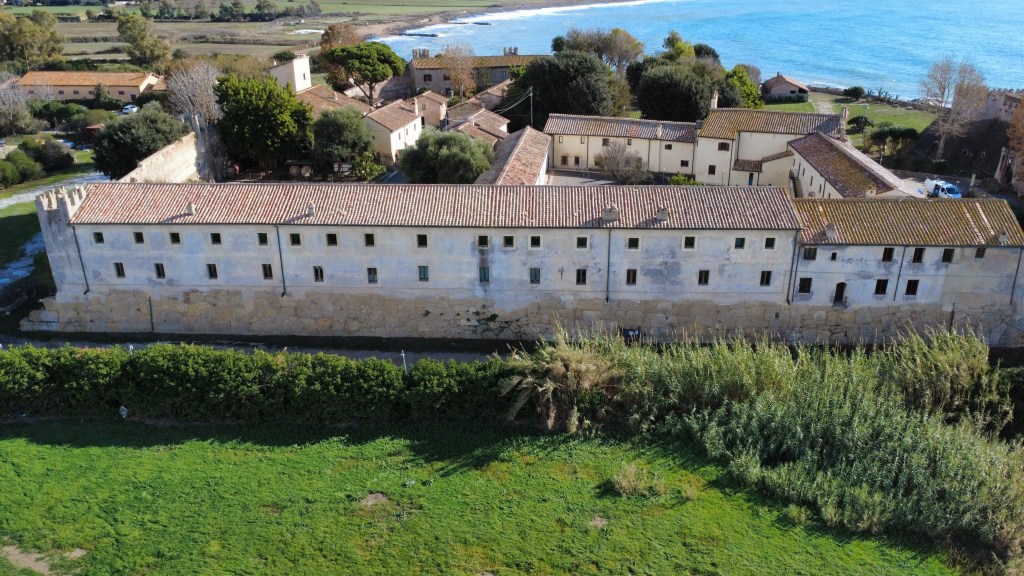
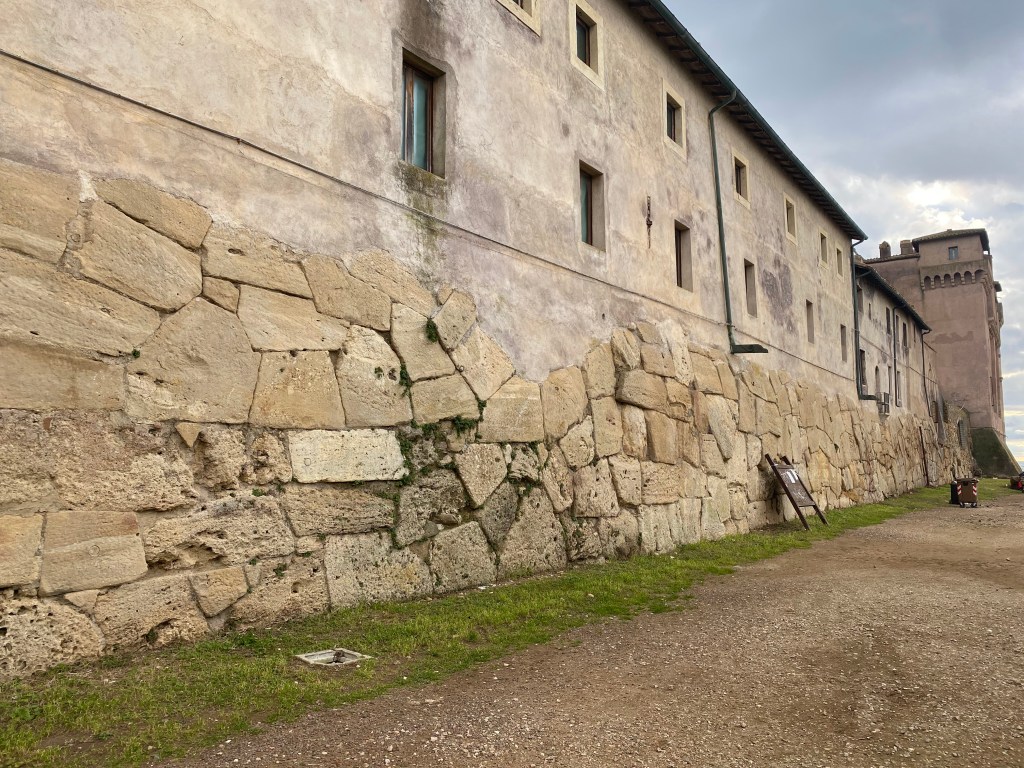
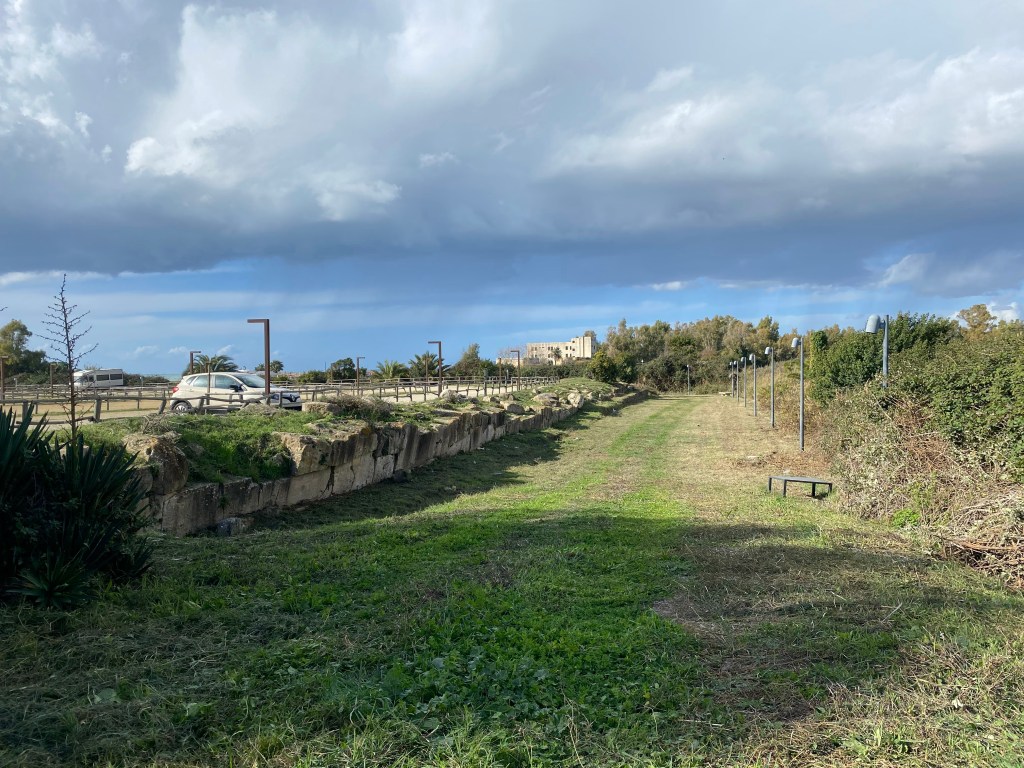
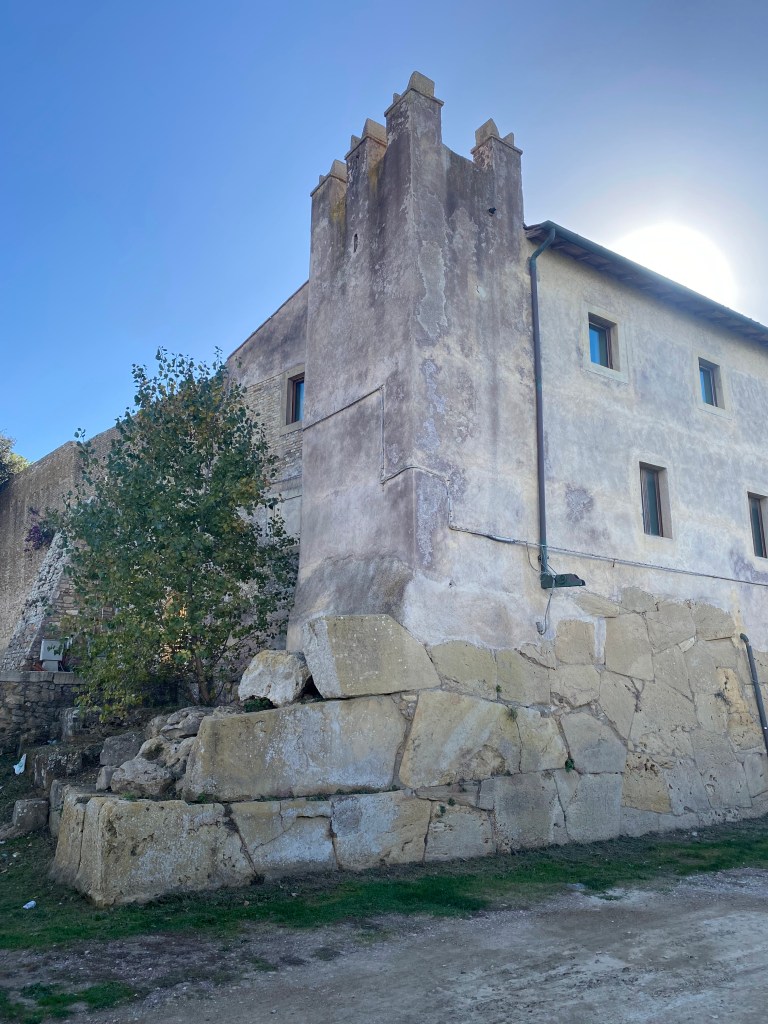
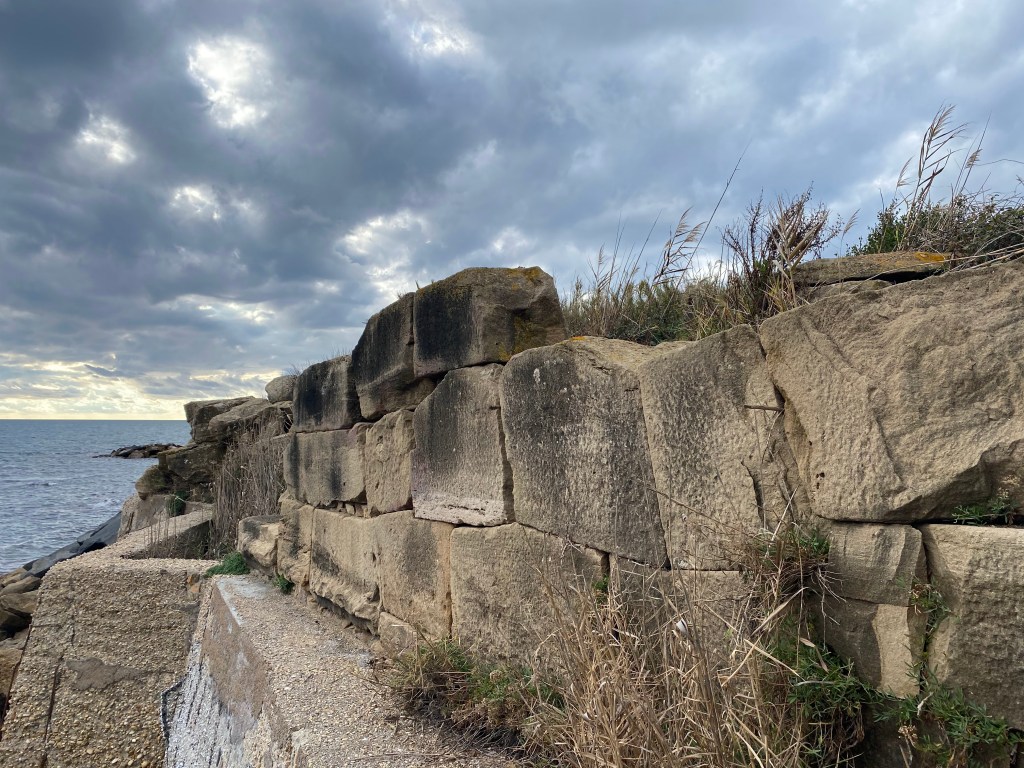
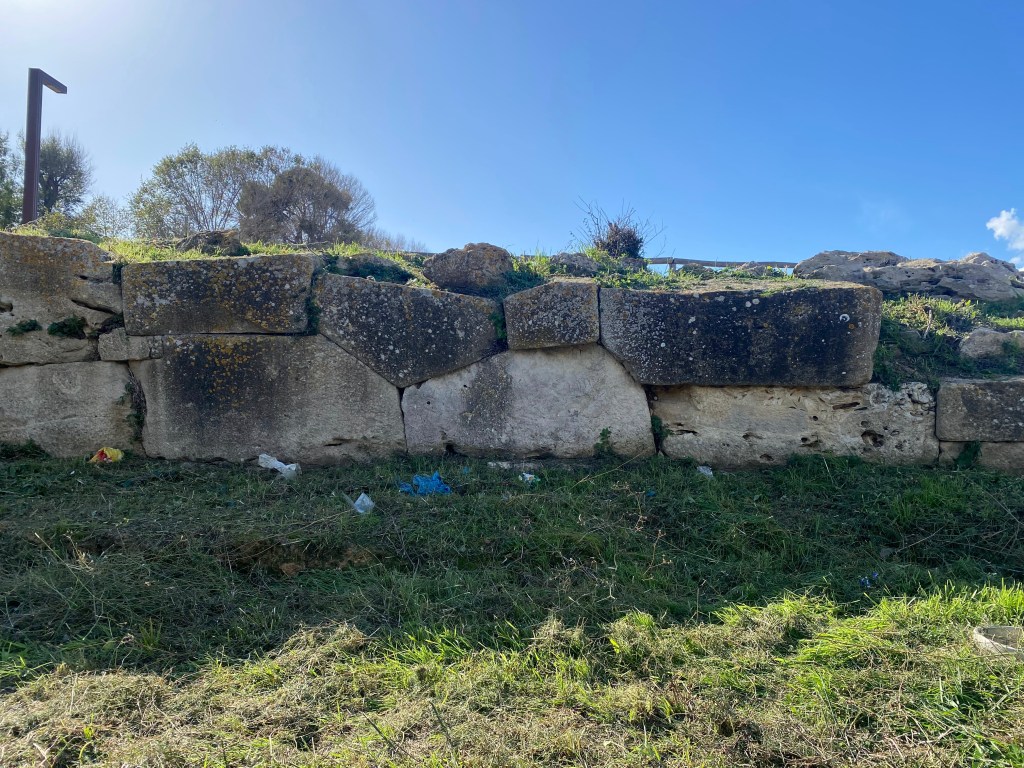
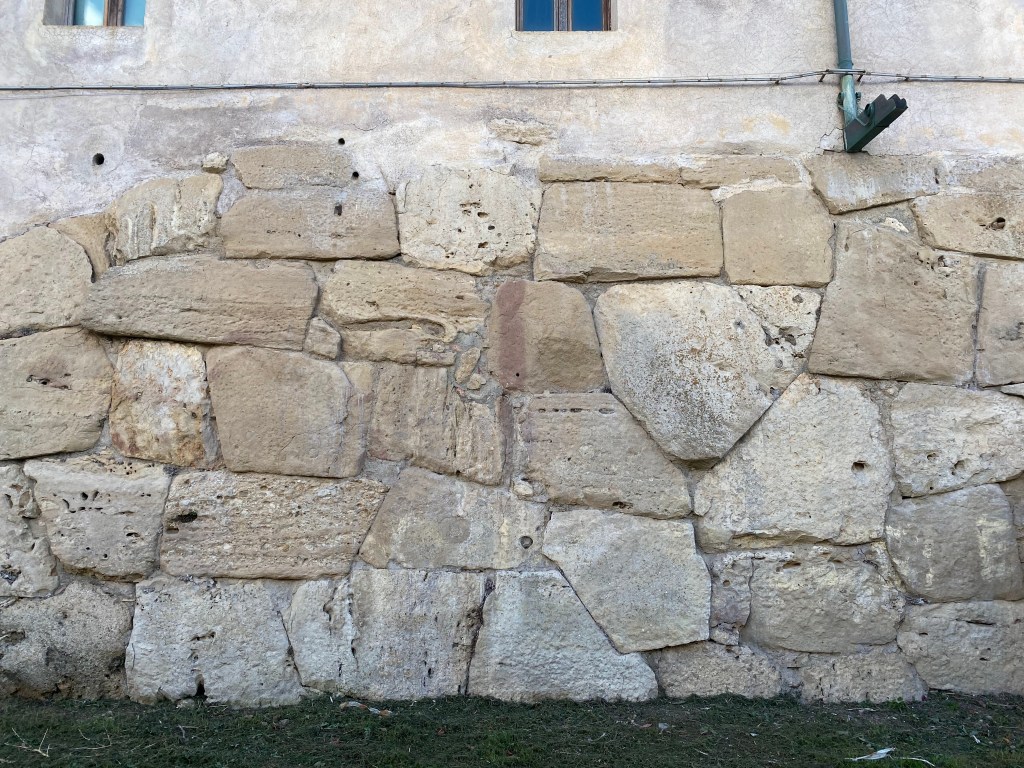
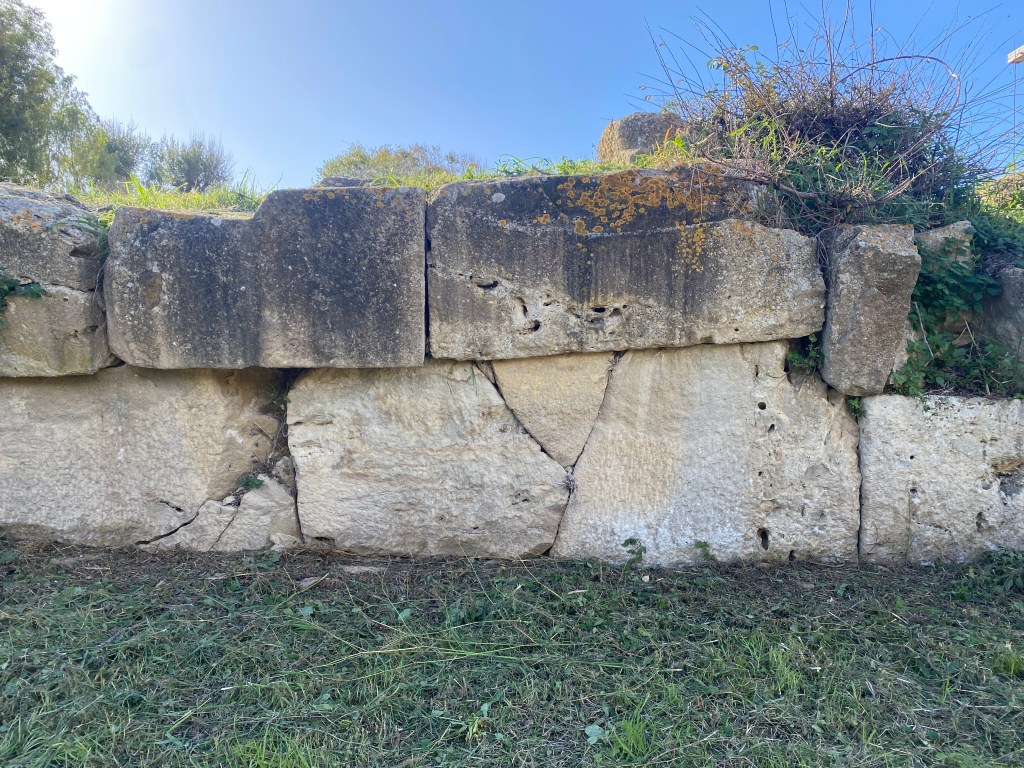
Characteristics: The polygonal masonry at Santa Severa is associated with the ancient port city of Pyrgi, one of the principal ports of Caere (modern Cerveteri). The original polygonal wall formed a rough rectangle of large sandstone blocks with multiple gateways. Some of the largest blocks on site reach 1-2 meters in length and width. The joinery, while eroded over millennia, stills shows quite impressive precision. A medieval era castle was built over the ruins and partially obscures some of the coastal walls. Investigations under the castle’s foundations have found that the polygonal walls extend approximately two meters below the current water line.
Polygonal classification: Types II-III (Lugli)
Attribution: The site is attributed to the Etruscans, specifically the city state of Caere.
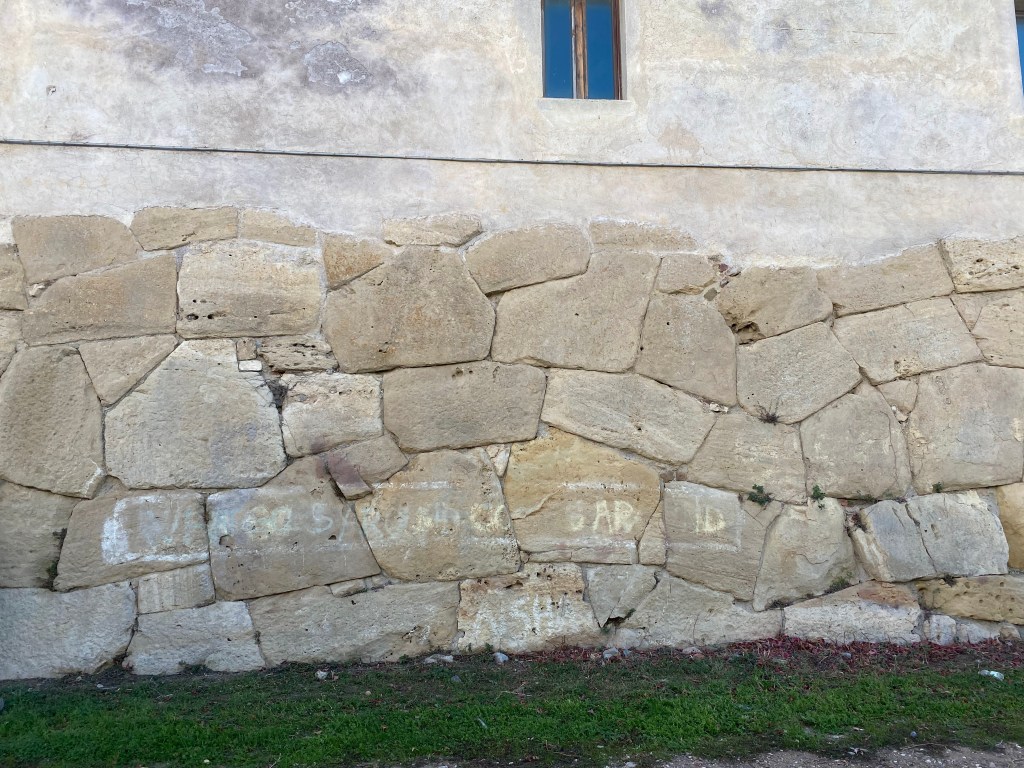
Specific points to see:
- Santa Severa Castle – perimeter polygonal walls and gateways (most visible on northern side of the castle) and submerged Etruscan port
- Sacred area of Pyrgi
 Minutiae