
PONTICELLI
Location: Ponticelli, Rieti (Italy) — 42.1764 N, 12.7969 E
Dating: 2nd century BC
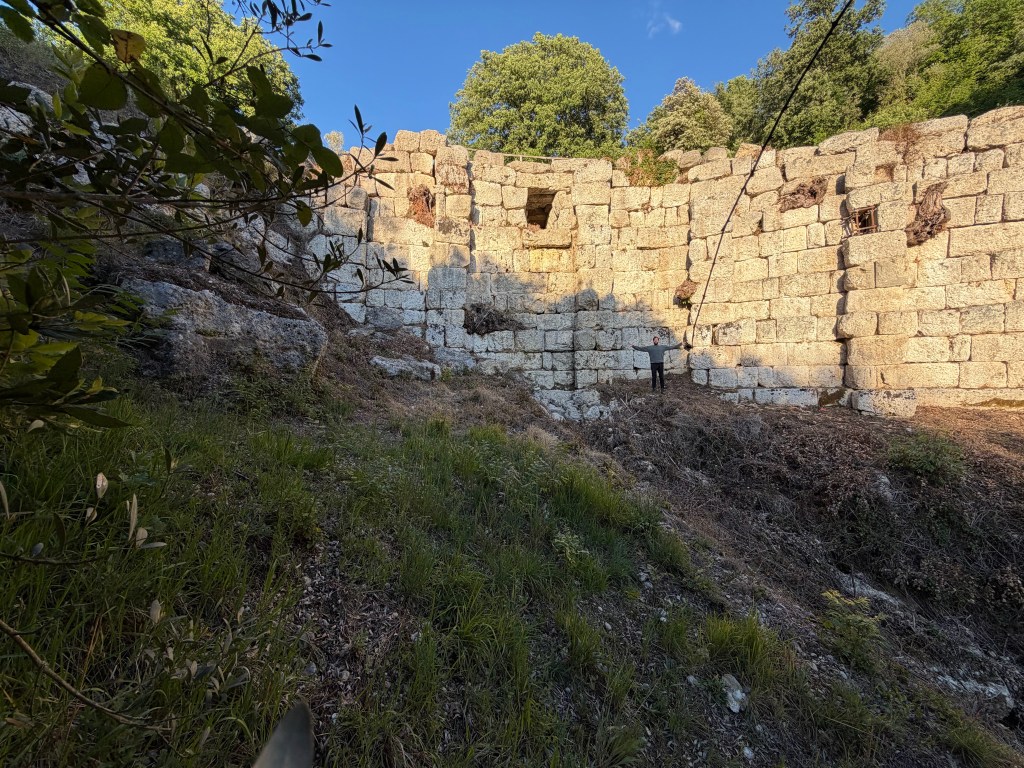
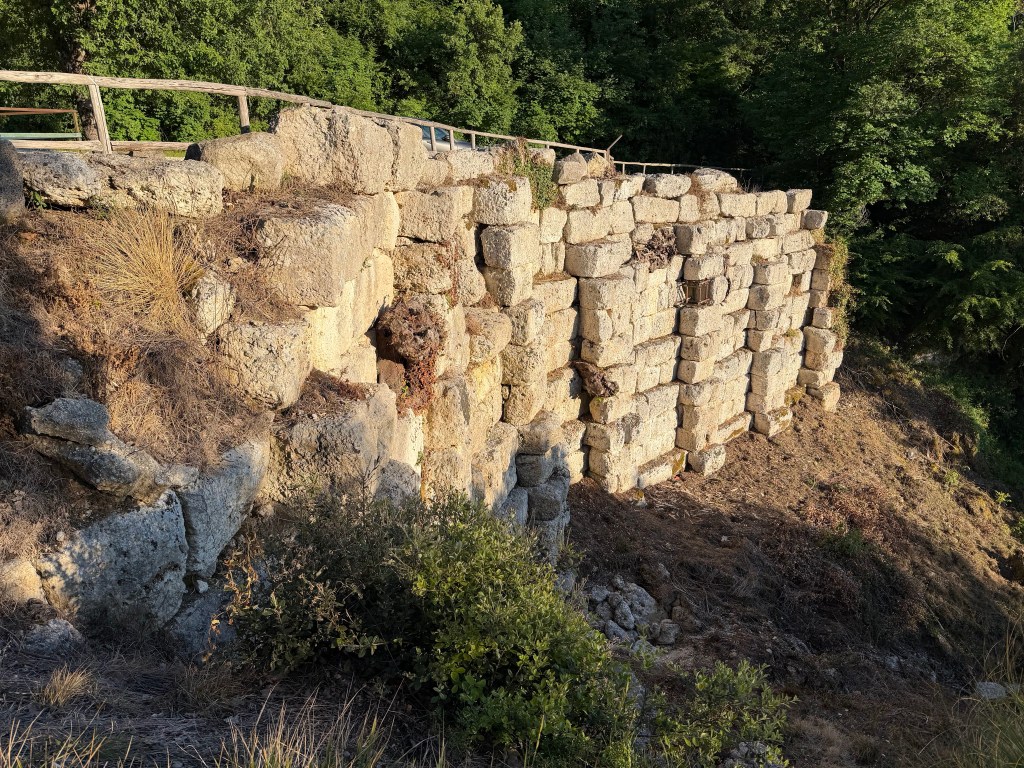
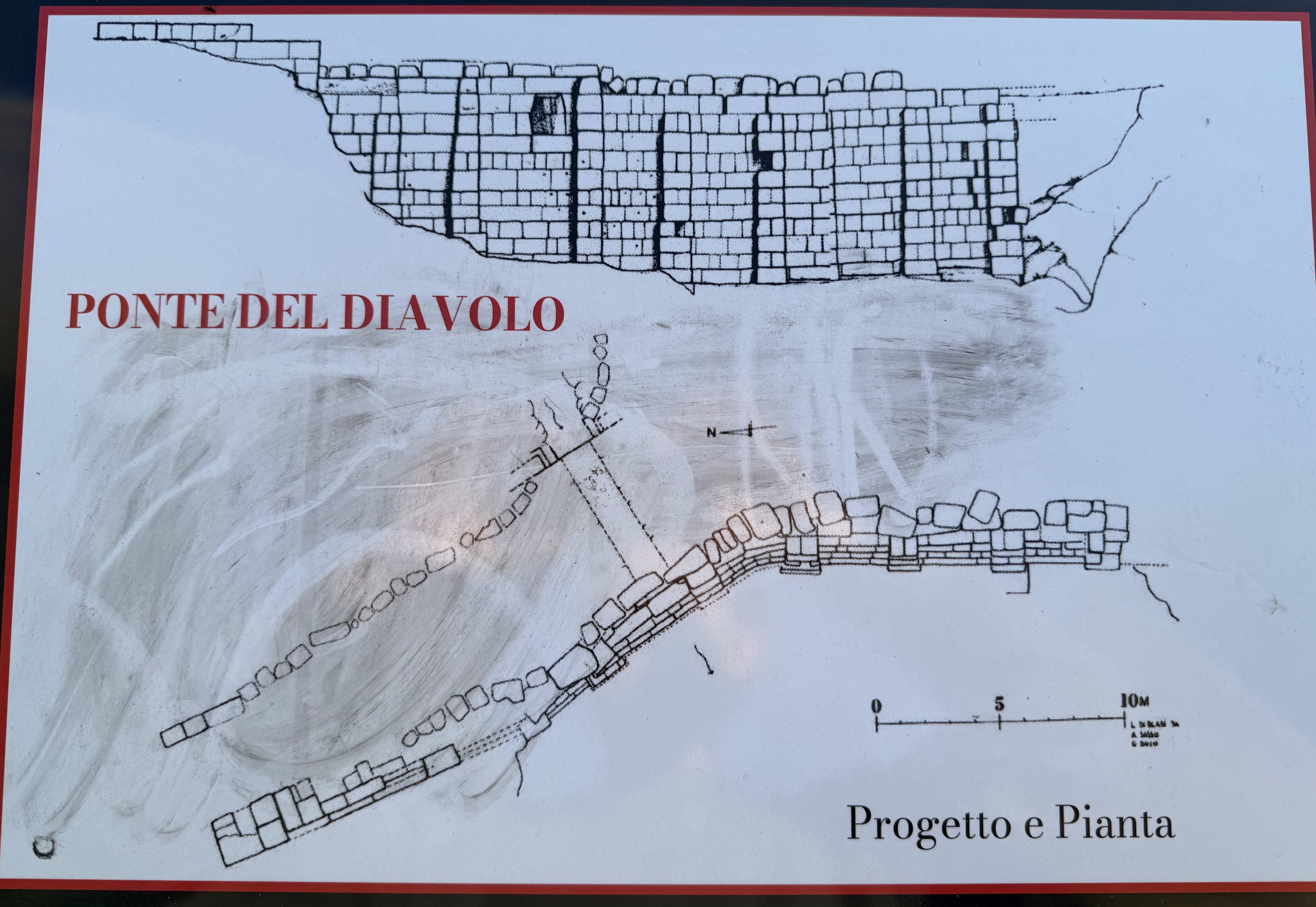
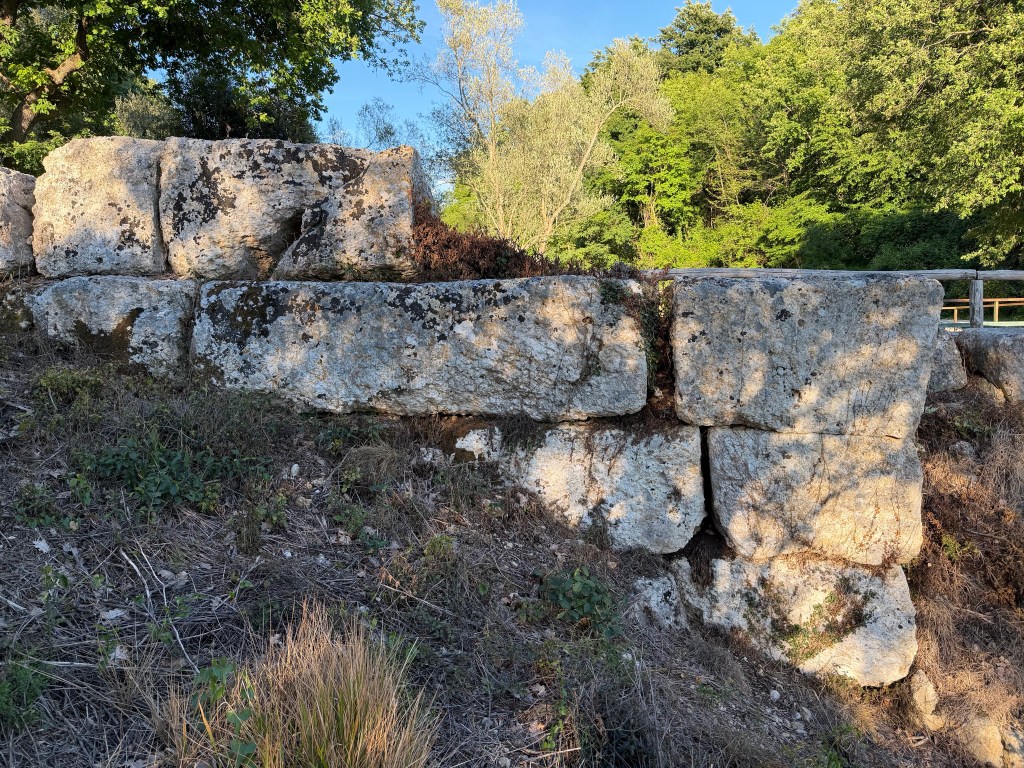
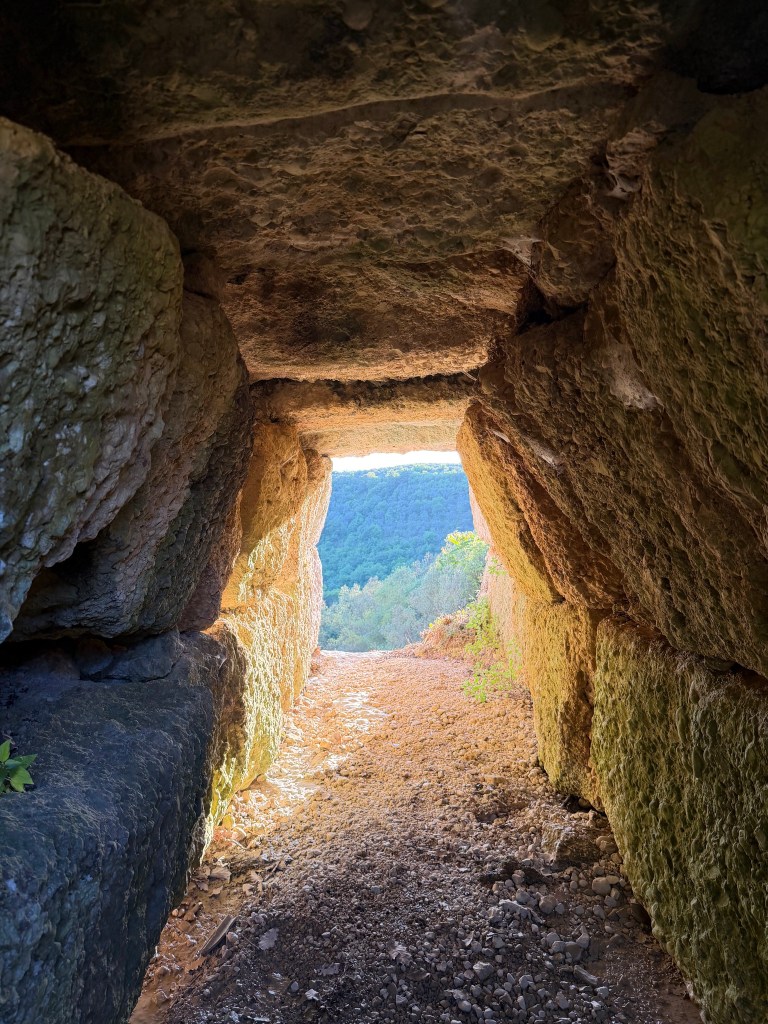
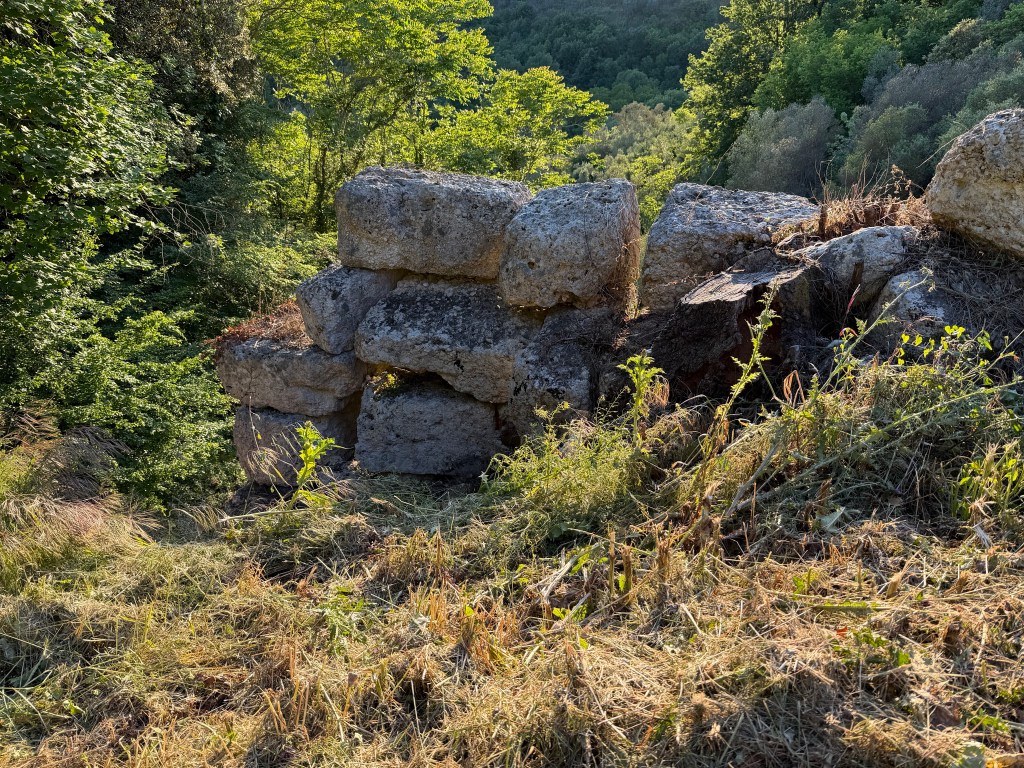
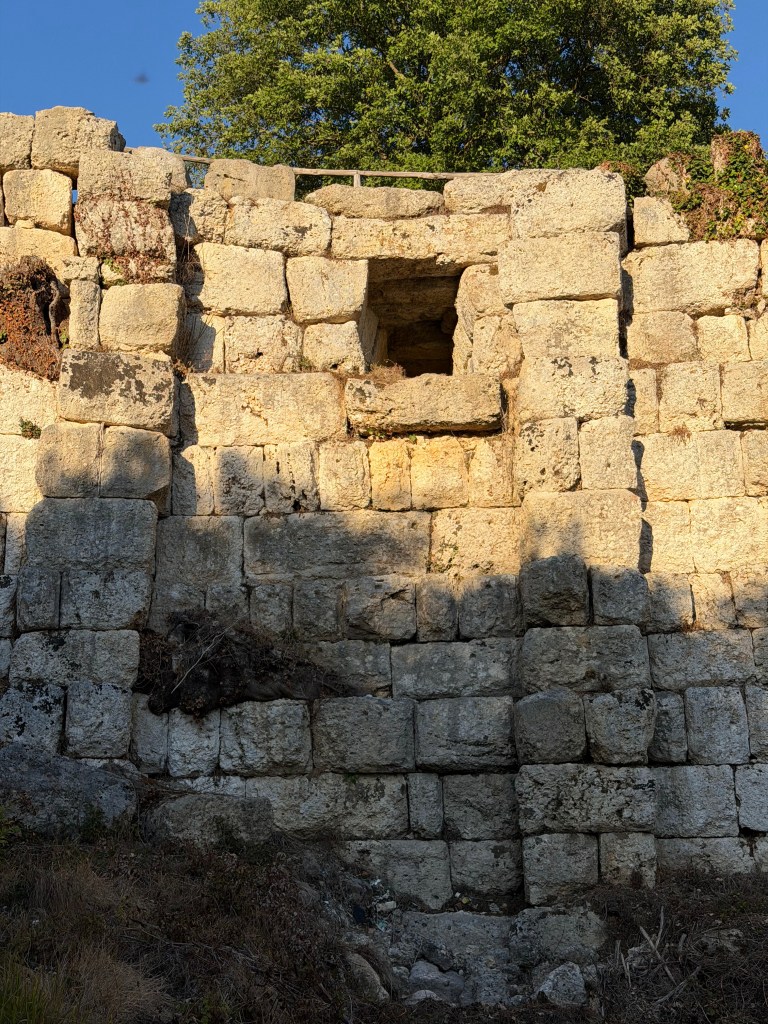
Characteristics: The Ponte del Diavolo is a monumental dry-fitted stone dam or retaining structure built across a narrow valley. Surveys of the site put the wall at up to 12 meters high at its tallest point, 30-50 meters in length, and with a base thickness of several meters. It was constructed from very large limestone blocks (in some places having an irregular or pseudo-polygonal look), giving the monument a distinctly megalithic appearance. The structure appears designed to impound and regulate local water flow and possibly support irrigation or agricultural use, but its original function is unknown. Accessible from behind the wall is a channel (or type of sluice gate) which opens out on the other side well above the ground. The bottom of the channel is rectangular while the second course blocks are angled inwards before being capped by horizontal lintels, forming a flattened-arch shape commonly seen in polygonal and megalithic gateways throughout Italy. Unlike the numerous identified Roman concrete dams, this structure is unique and relies primarily on the geometry and precision joinery of large fitted blocks. Approximate dimensions put the largest blocks at over 2.5 meters in length and 1 meter in height. Interestingly, there is no widely accepted direct archaeological date from excavation, inscription, or radiometric evidence. The main basis for its 2nd century BC dating is the construction style itself, despite its megalithic blocks being significantly bigger that any other known or surviving Roman dam.
Polygonal classification: Ashlar masonry most similar to Type IV (Lugli)
Attribution: It is normally attributed to the Sabines under Roman administration or directly to Roman hydraulic engineering in Sabine territory.
Specific points to see:
- Ponte del Diavolo

