
ITRI
Location: Itri, Latina (Italy) — 41.2894 N, 13.5360 E
Dating: 4th–2nd centuries BC
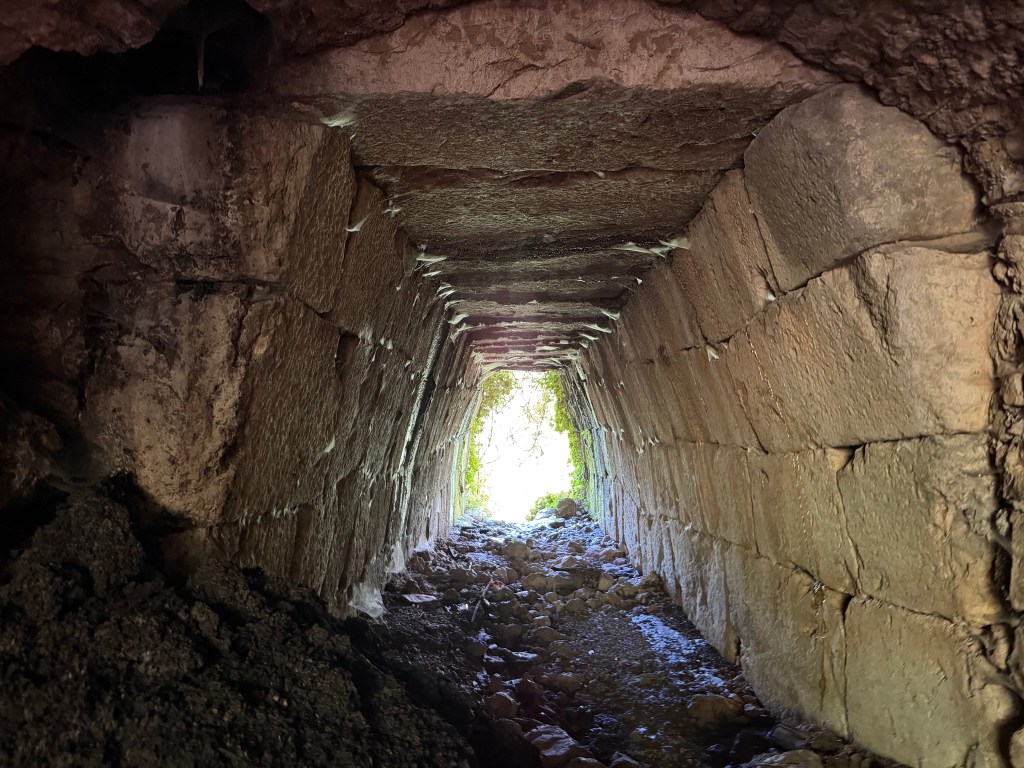
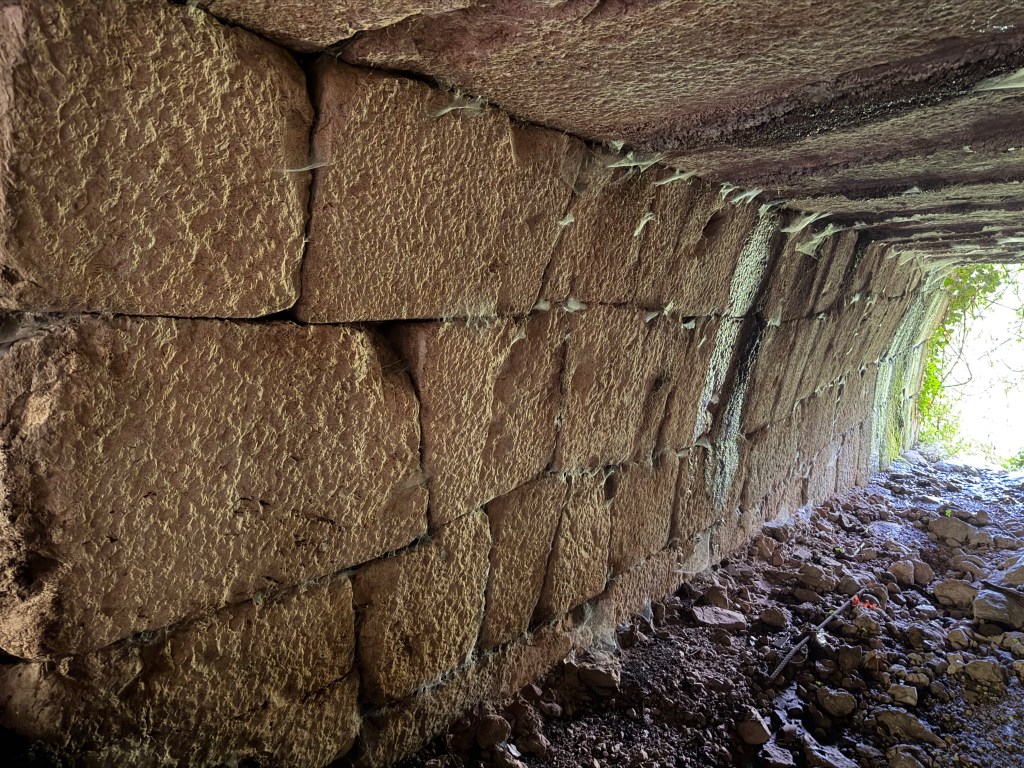
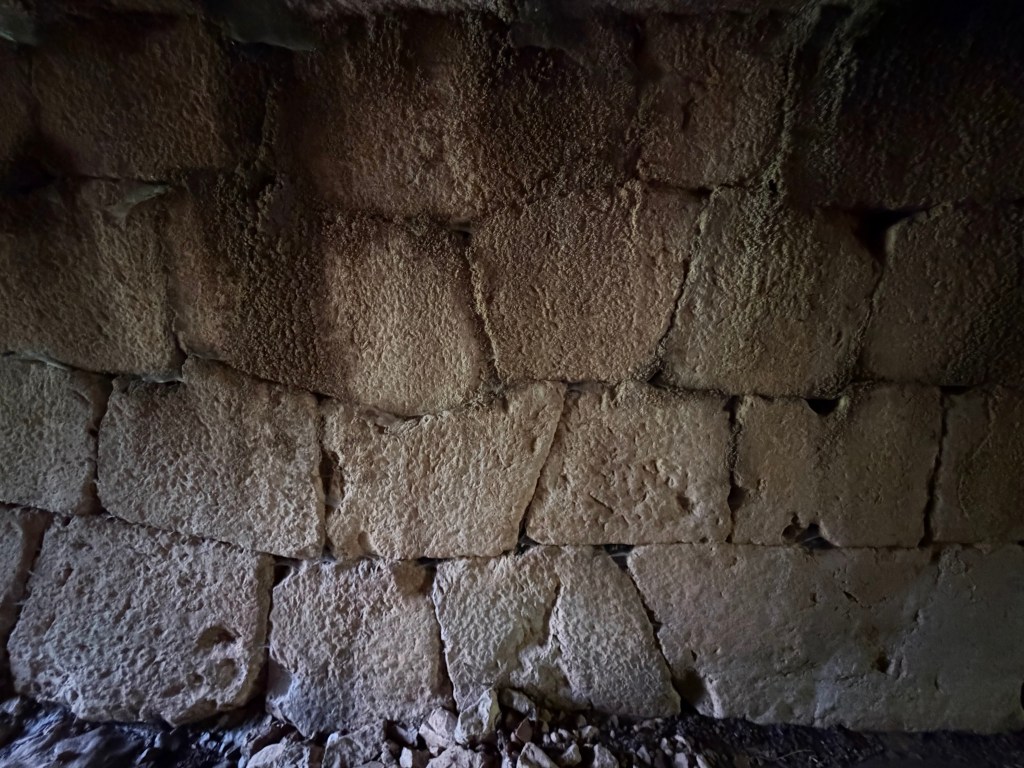
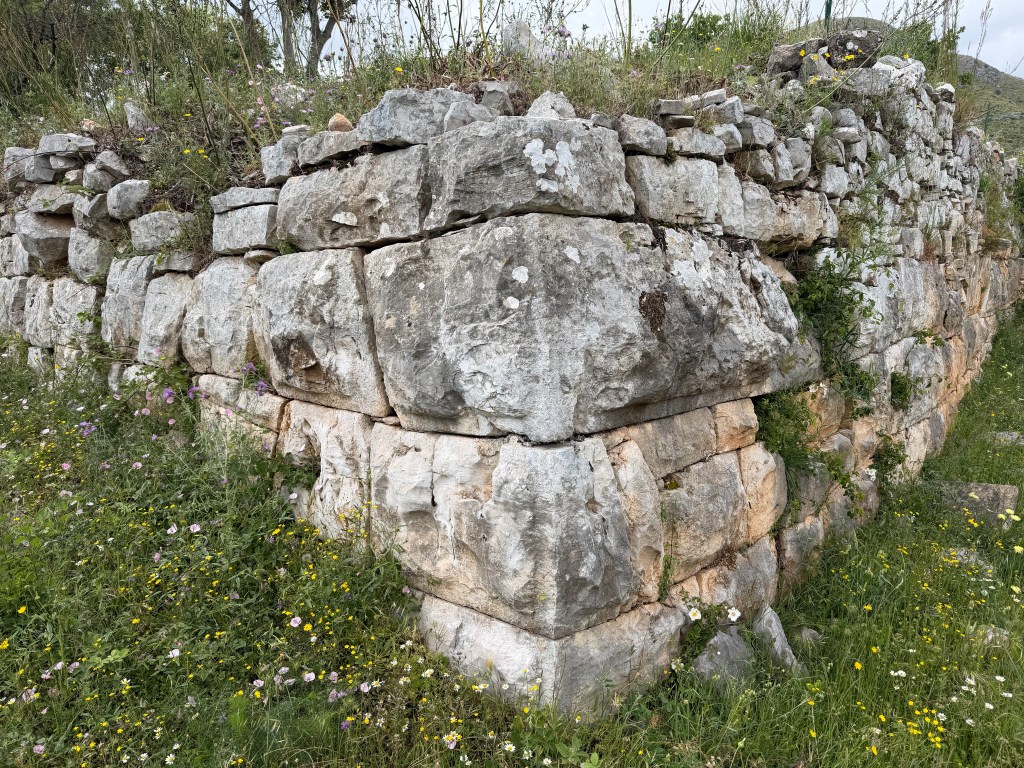
Characteristics: Itri contains two principle areas where polygonal stonework remains. The first is located under Corso S. Gennaro in a drainage canal. Descending into the canal one finds themselves staring through a fully preserved polygonal tunnel. Its arched walls and straight lintels are similar to many other megalithic gateways of Lazio. At the other end of the tunnel, the wall drops off 4-5 meters. This particular wall is entirely polygonal, but is unfortunately almost always covered by vegetation. Numerous theories are debated as to the purpose of this tunnel. Was it a defensive postern, a controlled access route, or did it have a hydraulic function? Along Corso S. Gennaro more examples of polygonal stonework can be found inside private residences and small grottos. The second location can be found at higher elevation across the valley. The Santuario of Ercole is an ancient temple built over an even older megalithic platform. The largest rectilinear blocks are over one meter long and fit together precisely. One notable feature of the platform is the beveled corner blocks and bulging faces of blocks along the side. These signatures are not especially common in Italy (or with Roman monumental architecture) and are found much more frequently on polygonal stonework throughout Greece and Turkey.
Polygonal classification: Types III-IV (Lugli)
Attribution: The site is generally attributed to the Aurunci, a pre-Roman peoples of southern Latium
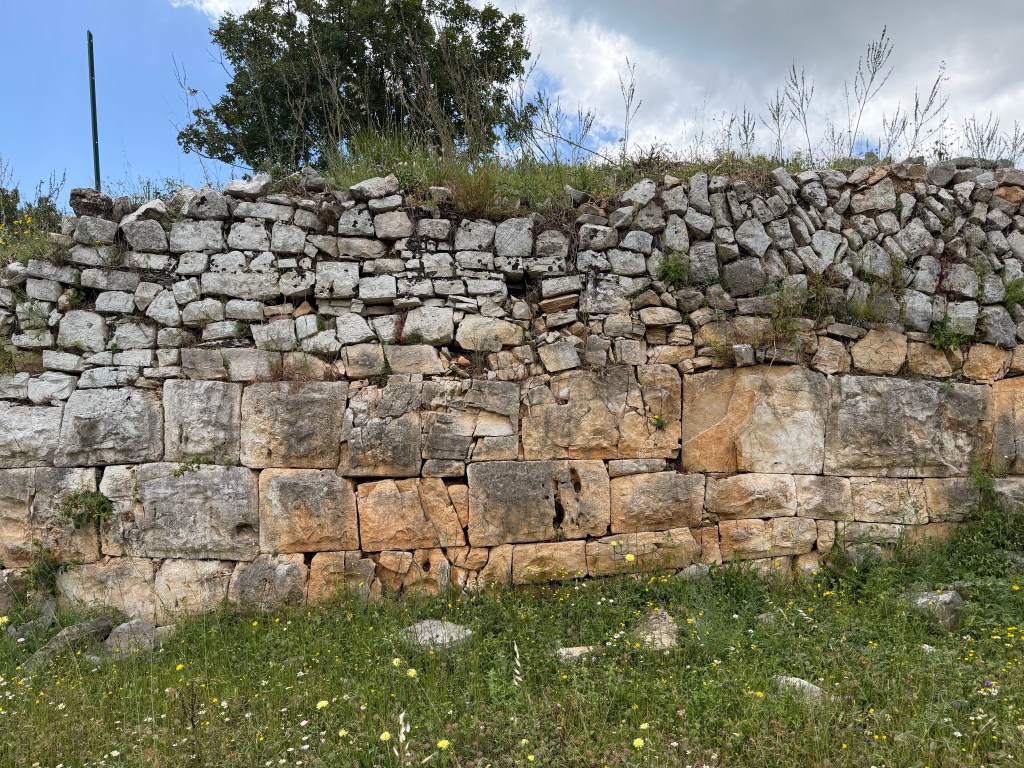
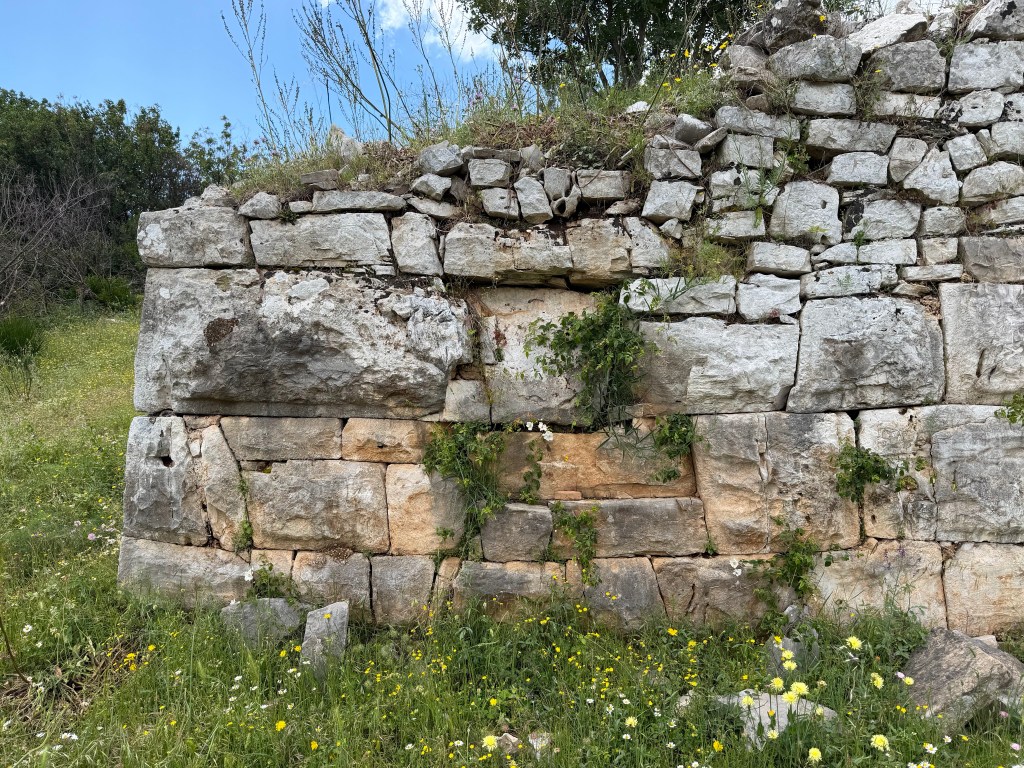
Specific points to see:
- Corso S. Gennaro
- Santuario di Ercole

