
ĦAĠAR QIM
Location: Qrendi (Malta) — 35.8277 N, 14.4420 E
Dating: 3600–3200 BC (Ġgantija Phase, Maltese Temple Period)
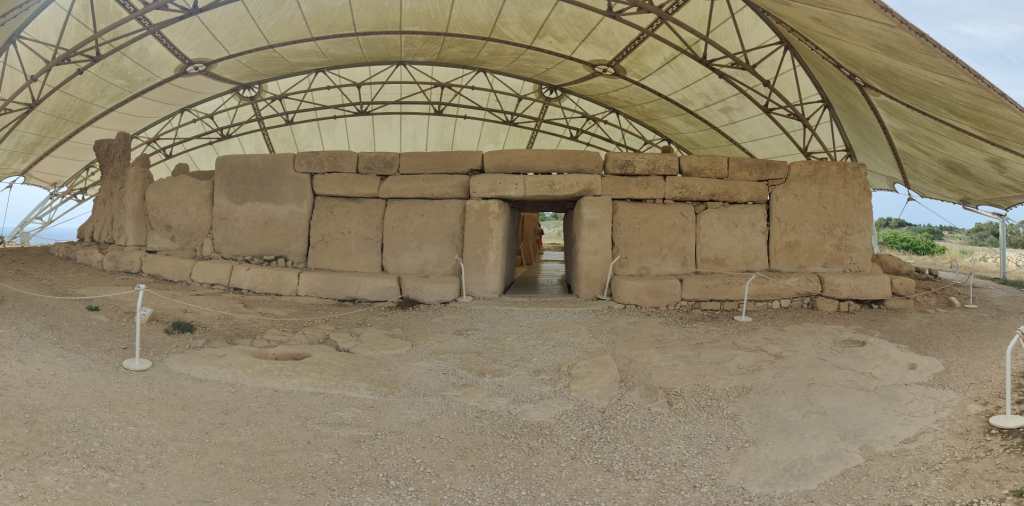
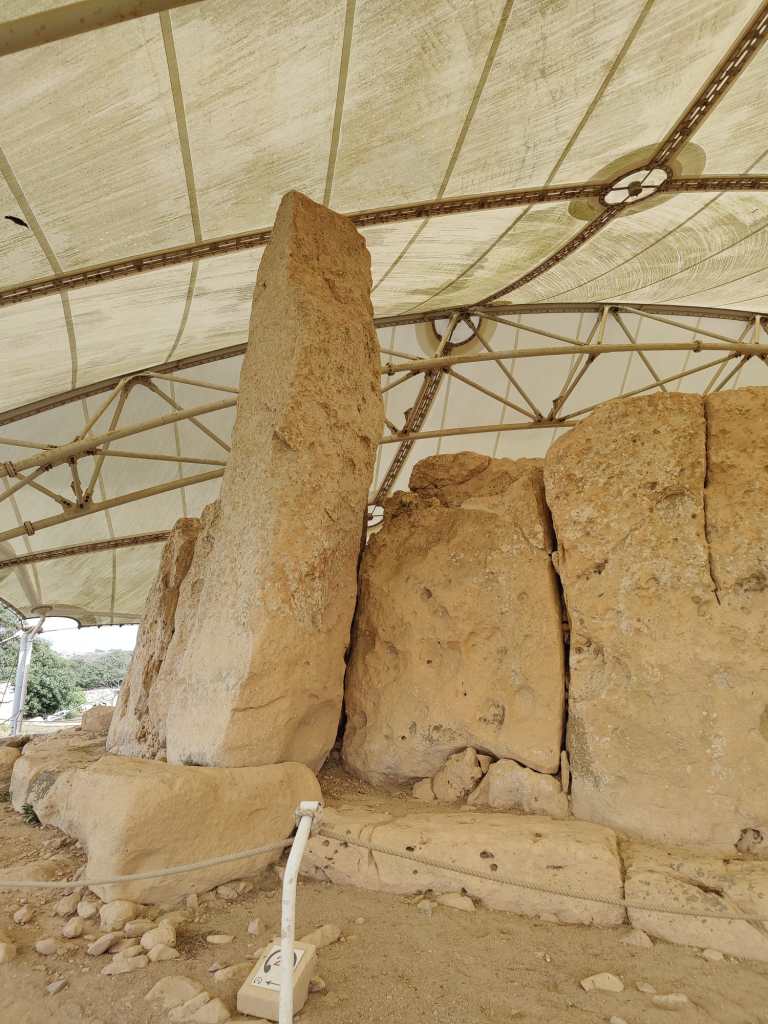
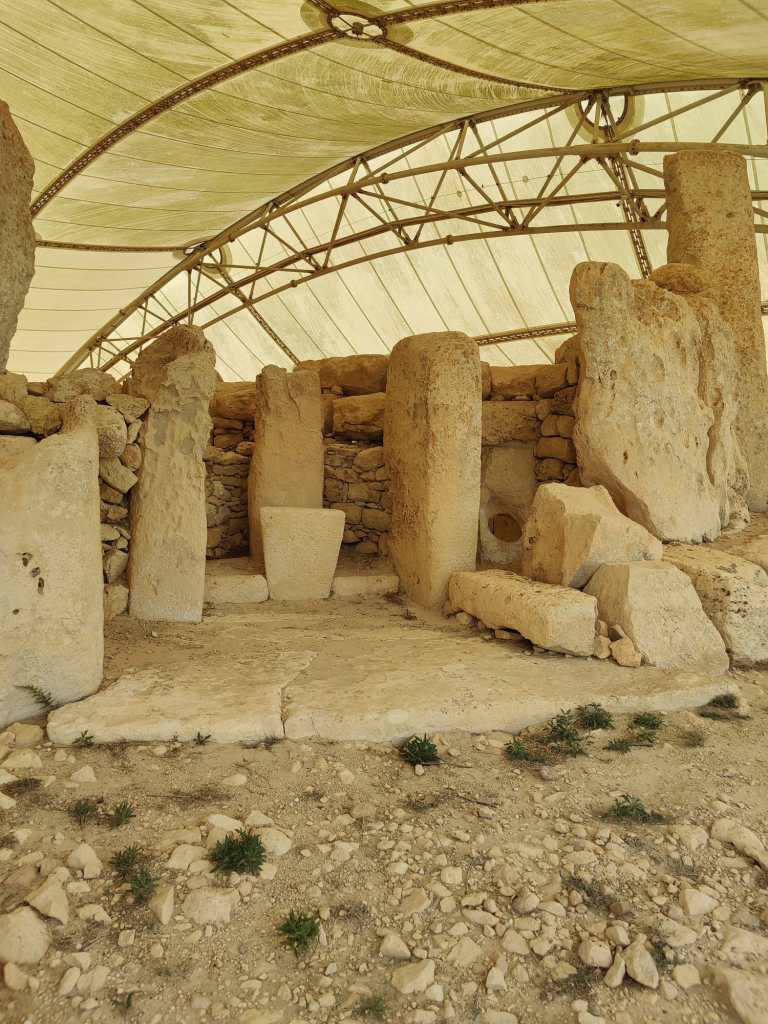
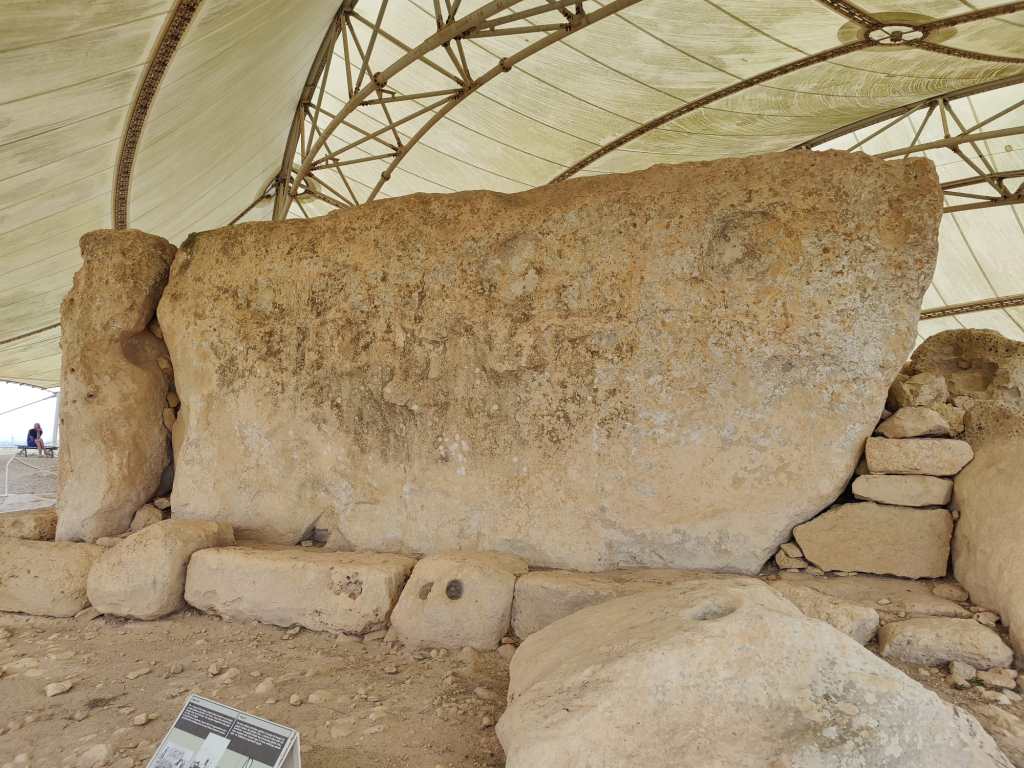
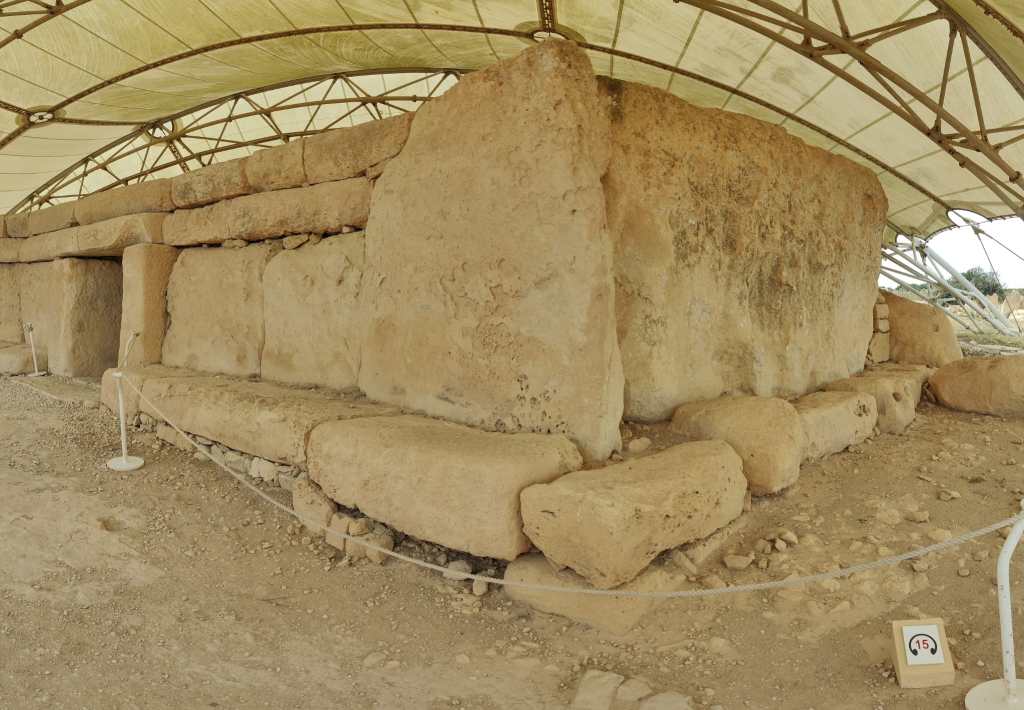
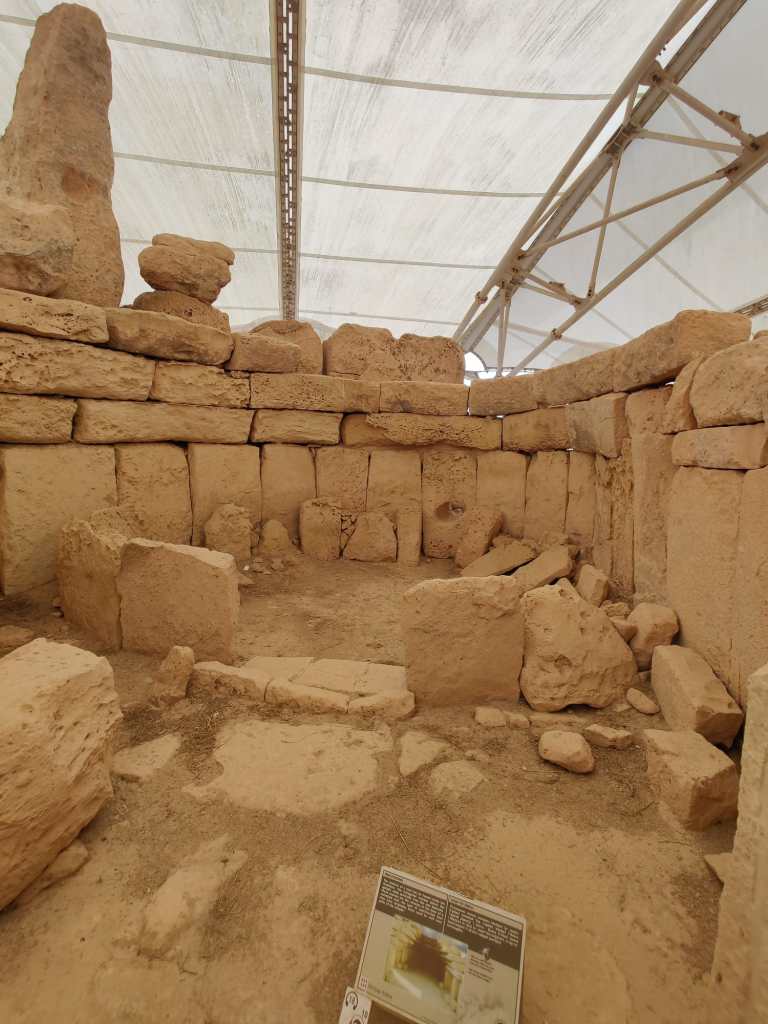
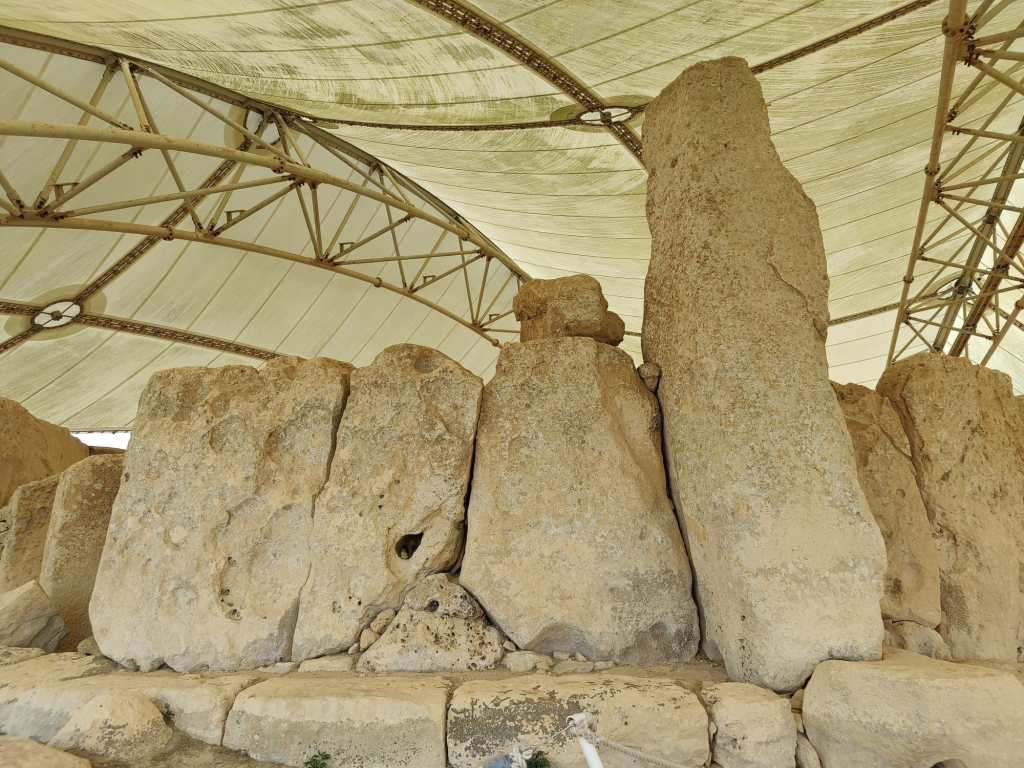
Characteristics: Ħaġar Qim is one of Malta’s principal prehistoric temple complexes, constructed from large limestone megaliths during the Neolithic Temple Period. It differs from more traditional polygonal masonry in that it uses large upright rock slabs and horzontal lintels. One chamber is aligned with the summer solstice sunrise, suggesting astronomical awareness. It was built primarily of globigerina limestone, softer and more workable than the coralline limestone used at some other Maltese temples. The complex consists of a central temple structure with multiple apsidal chambers arranged around a main corridor. The façade includes massive orthostats; some blocks measure 5–7 meters in height and weigh an estimated 15–20+ tons. The massive doorways (consisting of two uprights with a lintel) form monumental entrances. Several carved altars, decorated stone slabs, and libation holes are present. The Maltese Temple Culture is especially unique and intriguing because it predates traditional polygonal-building cultures and even the Pyramids of Egypt.
Polygonal classification: Neolithic megalithic temple architecture most similar to Types I-II (Lugli)
Attribution: The site is attributed to the Maltese Temple Culture, a prehistoric Neolithic society unique to the Maltese archipelago.
Specific points to see:
- Ħaġar Qim Archaeological Site
 Minutiae