
CESI
Location: Cesi, Terni, Umbria (Italy) — 42.6093 N, 12.5827 E
Dating: 6th–4th centuries BC with possible later building or repair phases
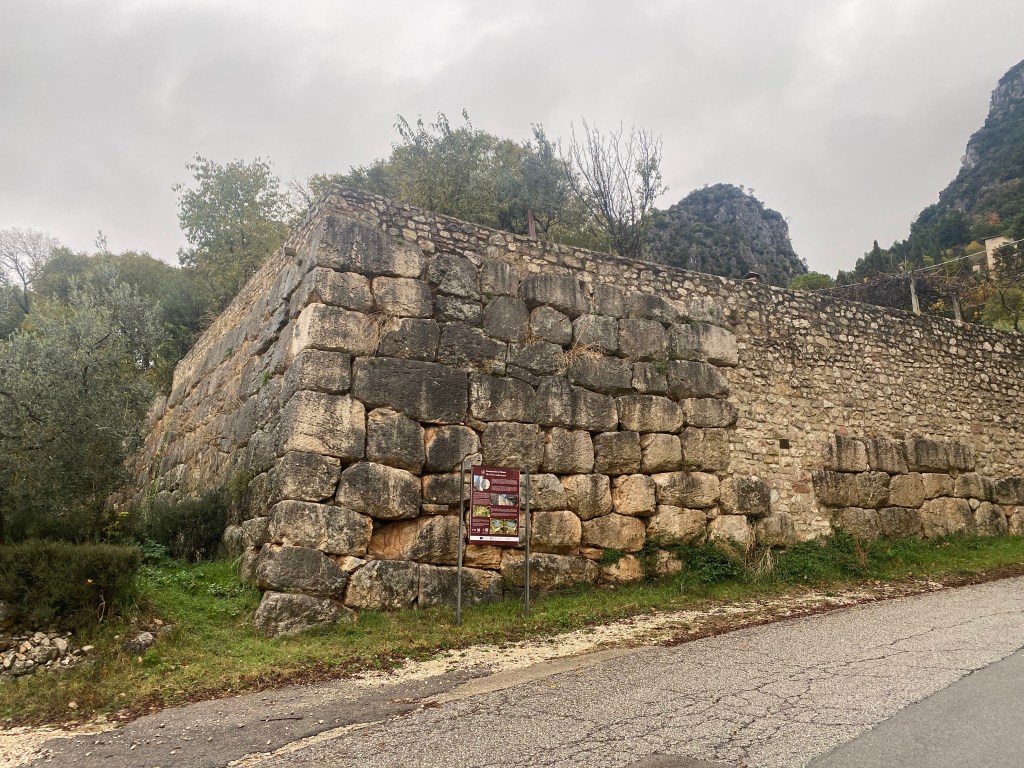
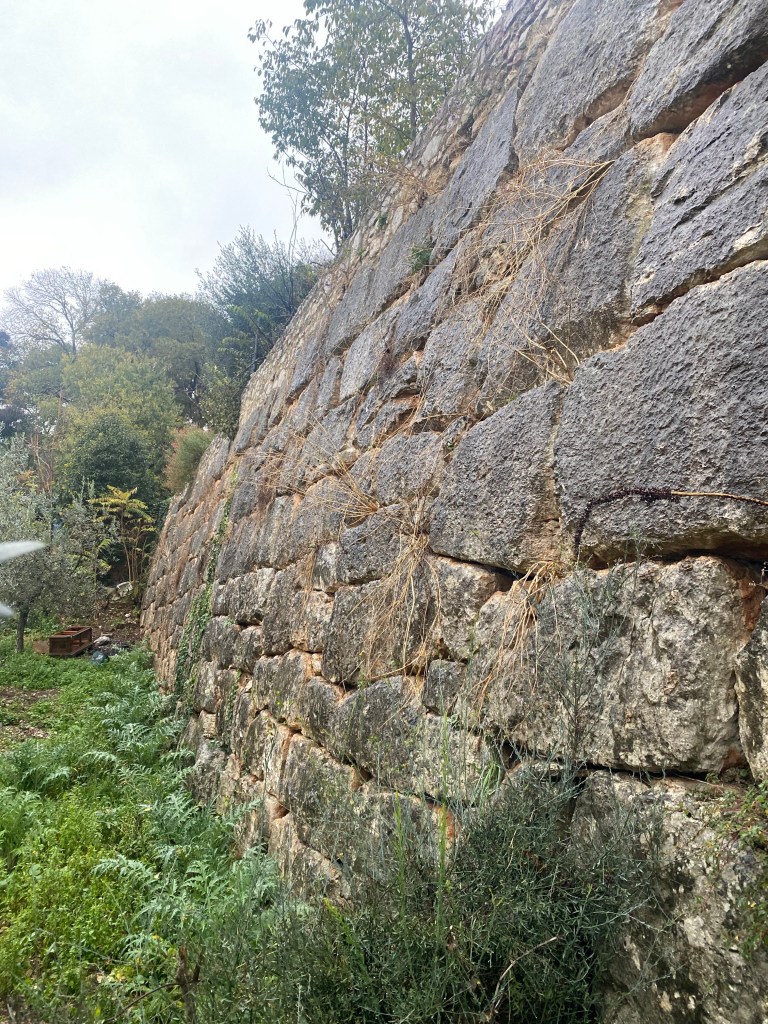
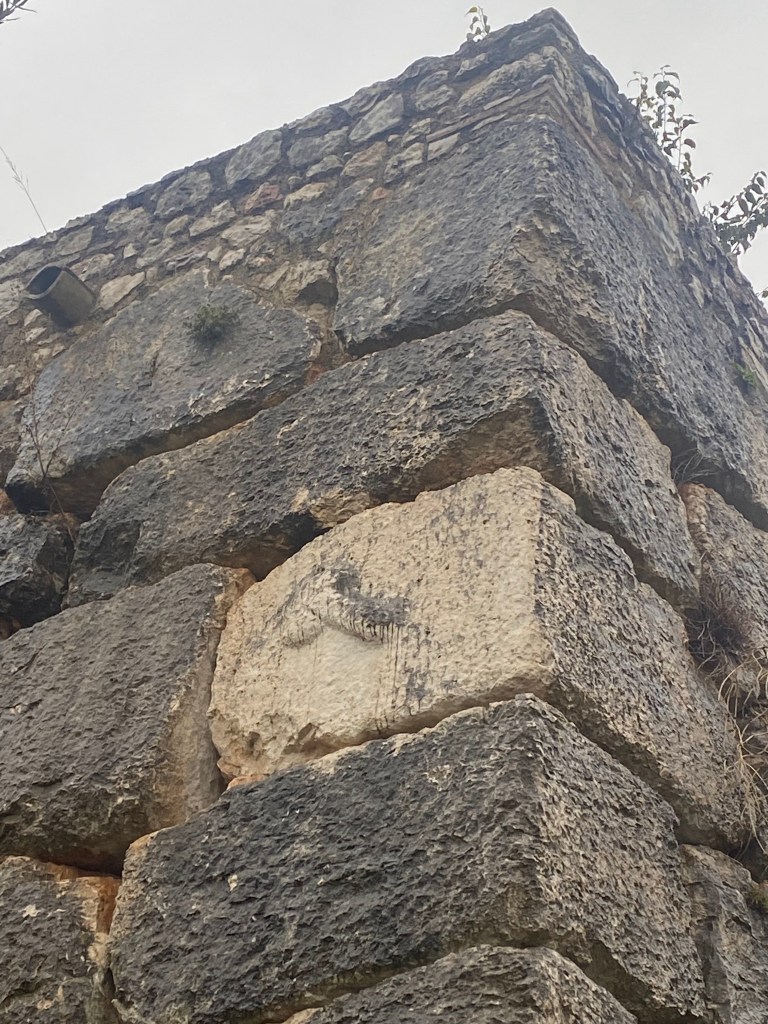
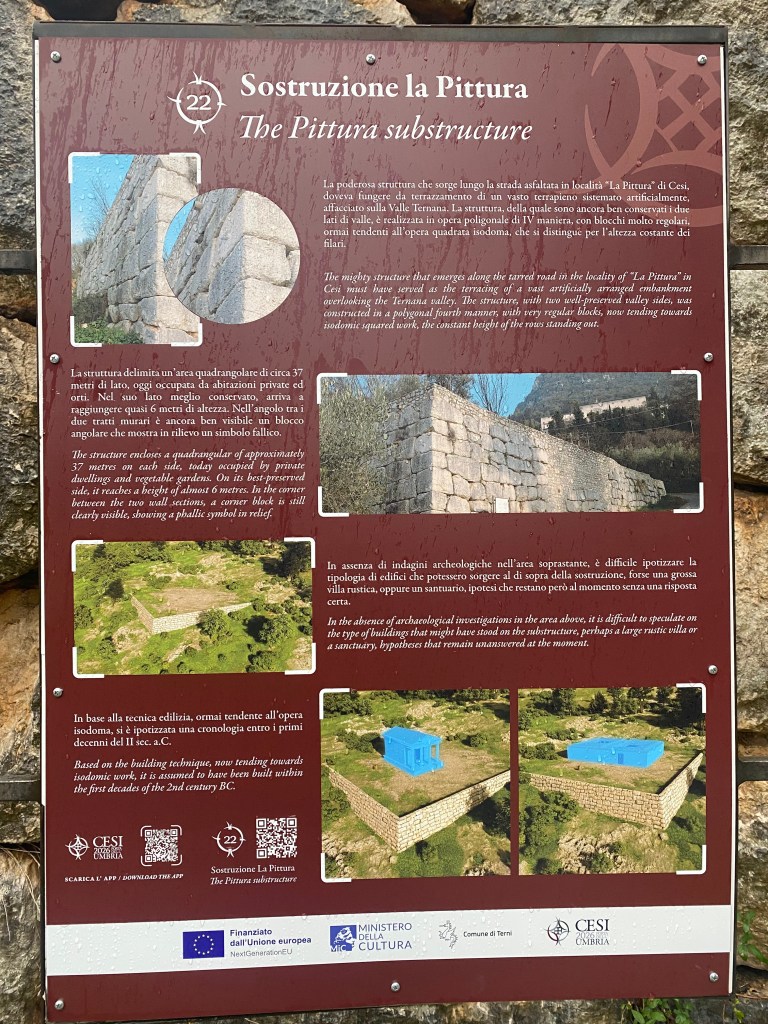
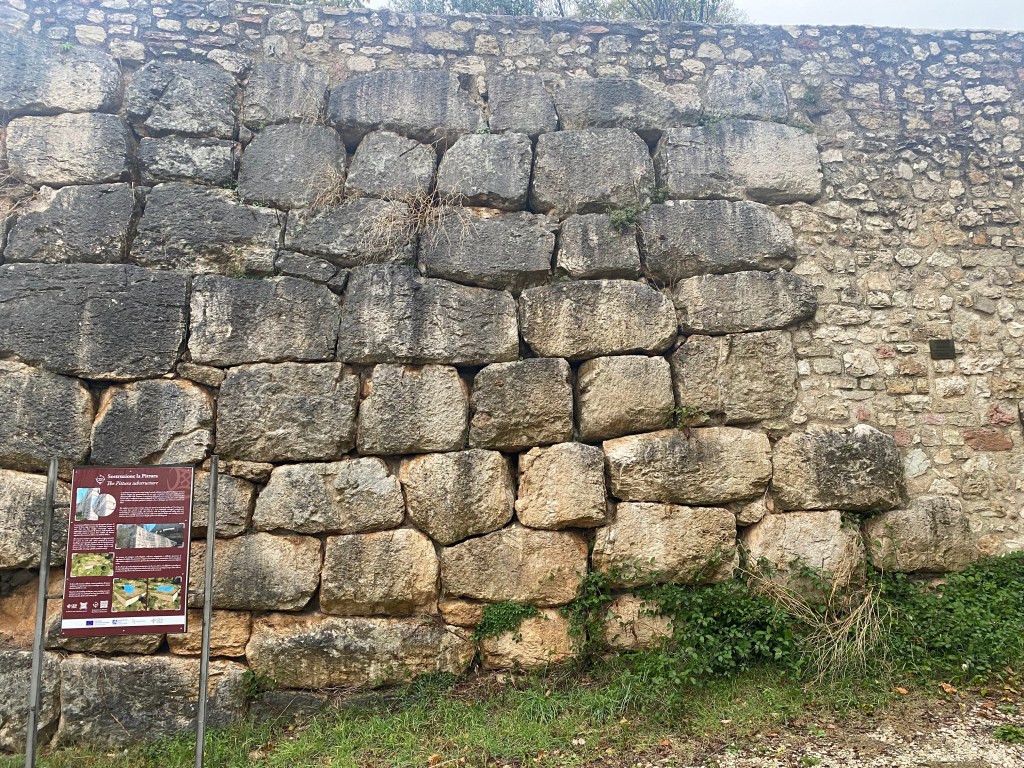
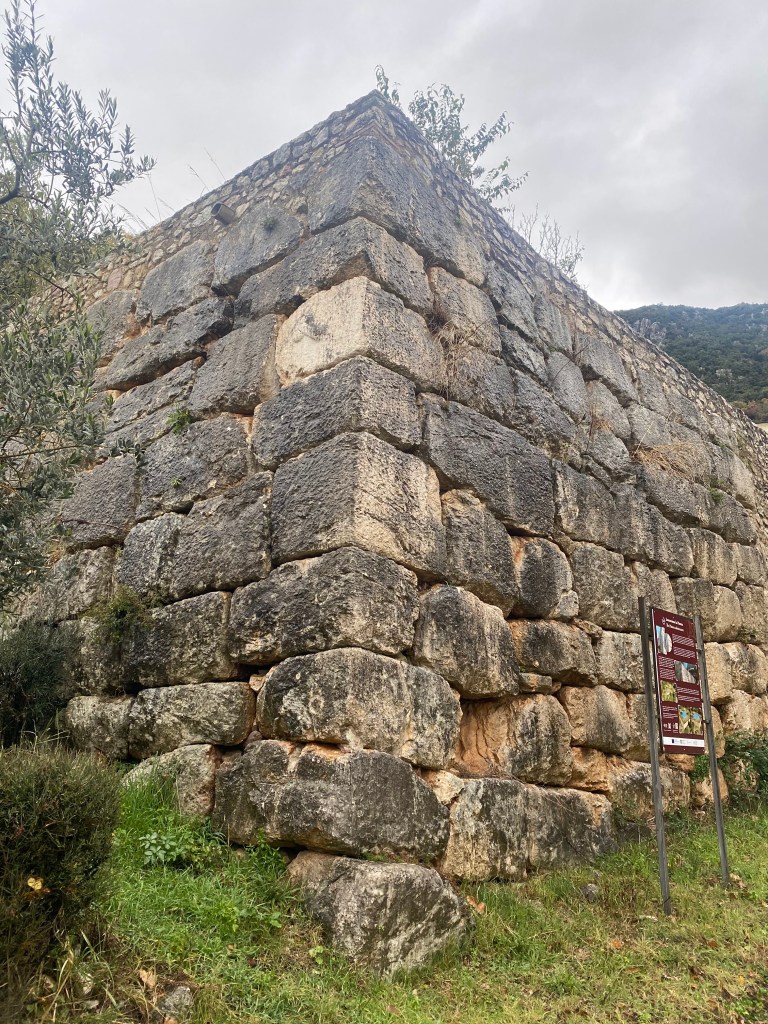
Characteristics: Located on a slope just outside of the small village, Cesi’s singular polygonal wall forms a substantial retaining terrace. The structure is built from moderately large, irregularly shaped limestone blocks. The blocks are carefully fitted with minimal wedge stones, and individual stones measure approximately 1 meter in length. The visible façade suggests deliberate monumentality rather than simple agricultural terracing. Additionally, the platform does not appear to have a deliberate defensive function as no other walls exist in the immediate surroundings. The most famous and intriguing aspect of this wall is the high relief carving of a phallus on the corner block. Often associated with good fortune during the Roman period, this particular symbol is found on a select few polygonal walls throughout Italy, Spain, Greece and Turkey.
Polygonal classification: Type II (Lugli)
Attribution: It is commonly attributed to the Umbrians, the Italic population inhabiting the region before Roman expansion. Later Roman occupation of the area likely reused or incorporated the structure, but the masonry technique is generally considered pre-Roman.
Specific points to see:
- Strada della Pittura
 Minutiae