
CASTELLONORATO (PORTA AUREA)
Location: Castellonorato, Formia, Lazio (Italy) — 41.2857 N, 13.6707 E
Dating: 4th-3rd centuries BC
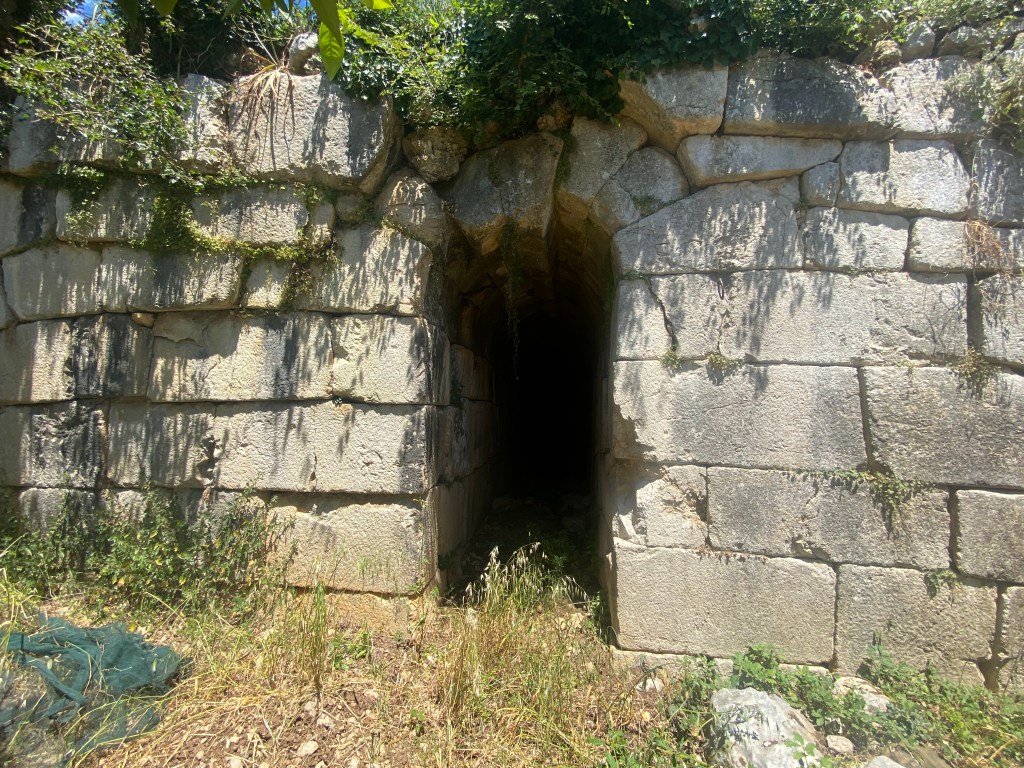
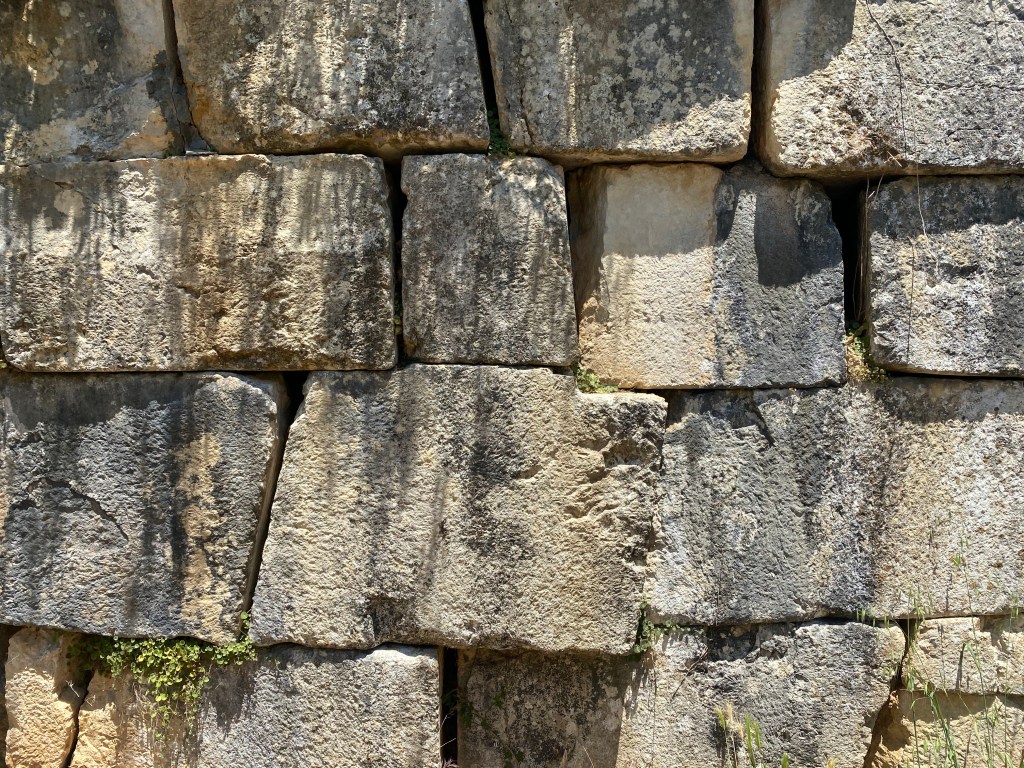
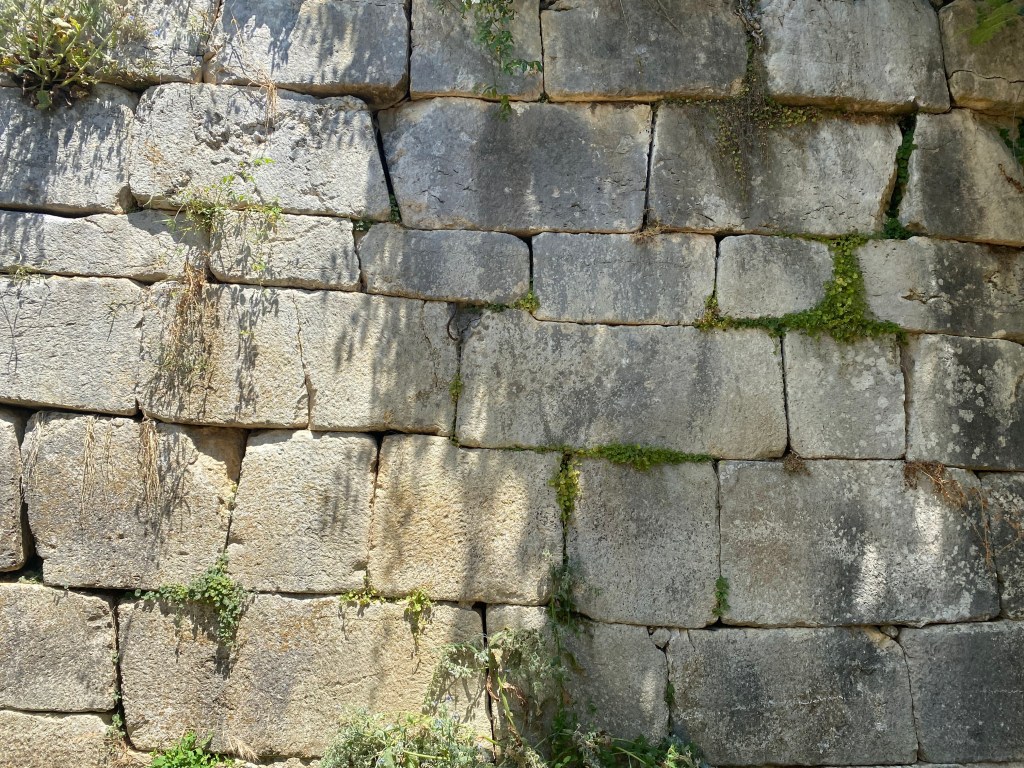
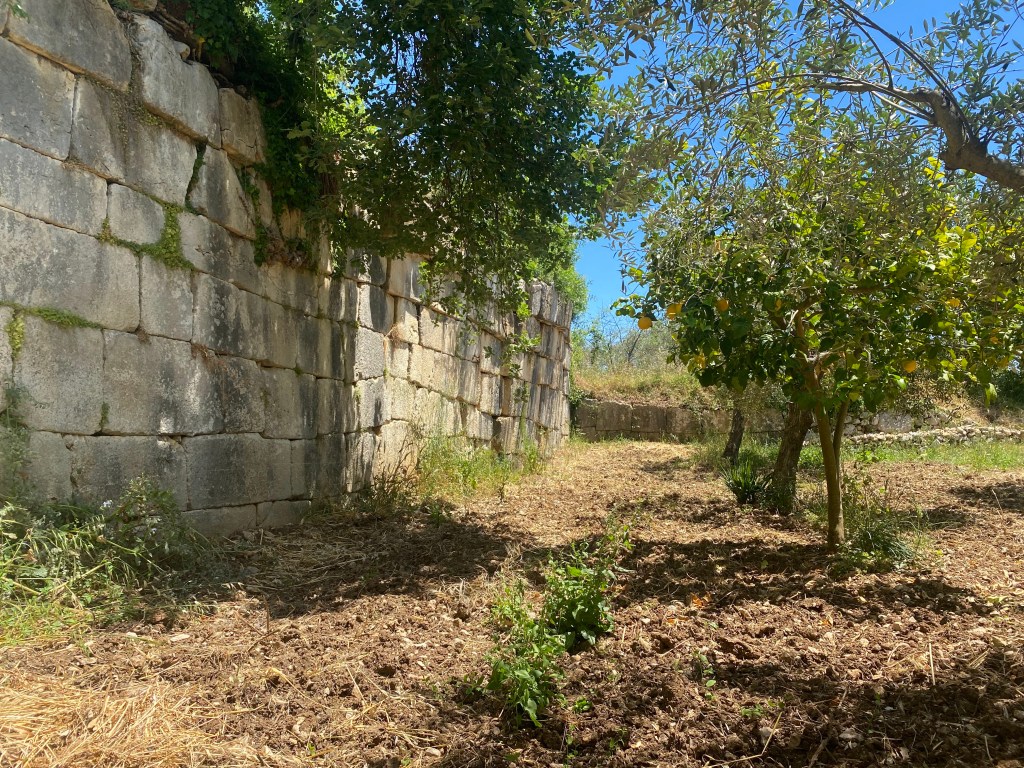
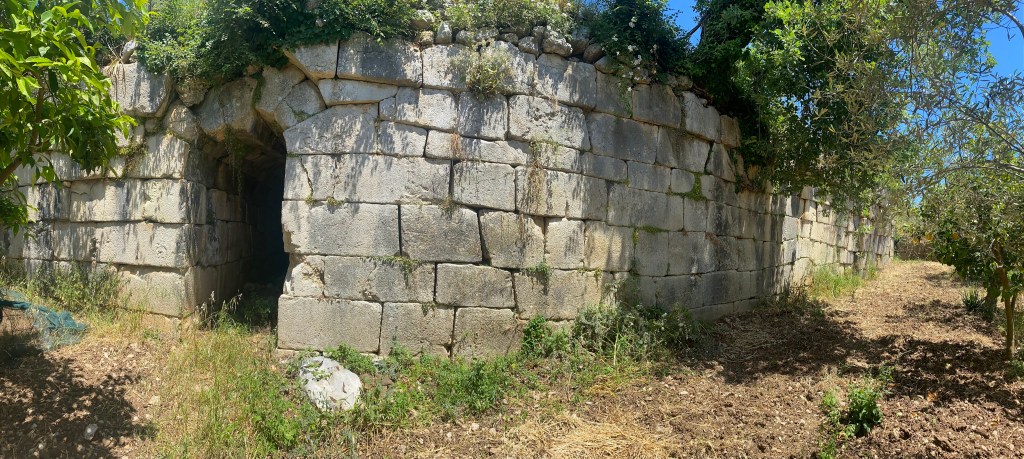
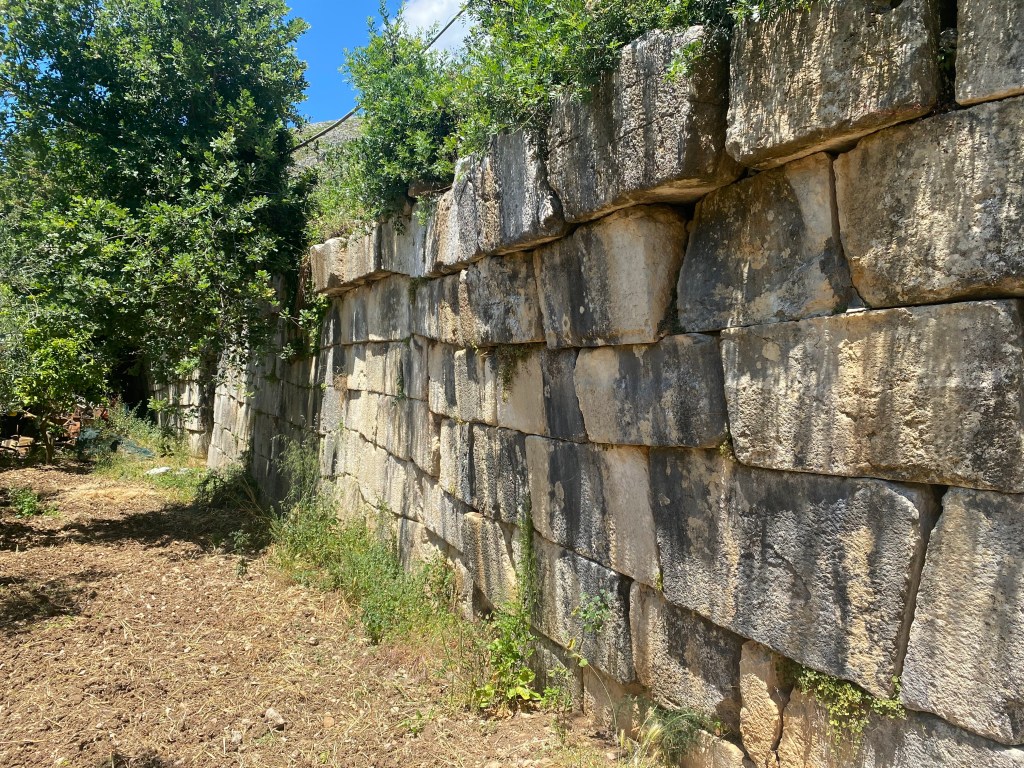
Characteristics: The polygonal remains of Castellonorato at the foothills of the Aurunci mountains are quite extensive. It is said many sections of walls and terraces exist only paritally visible in the sloping terrain. One particularly well preserved section known as the Porta Aurea can be found at a private residence north of Castellonorato’s village center. The wall is a spectacular example of polygonal terracing that continues to support land thousands of years after its initial construction. The wall stretches for approximately 40-50 meters with a fully preserved arched doorway and tunnel. The tunnel extends for about 5-10 meters, but it is not entirely clear if it originally continued through to an exit point or ended below ground level. The polygonal stonework is exceptionally precise where erosion and evidence of collapse have not shifted the stonework. Also, the wall displays more rectangular blocks than the traditional multi-angled blocks of Italic polygonal masonry.
Polygonal classification: Types II-III (Lugli)
Attribution: The site is typically attributed to the Aurunci or Volsci cultural sphere prior to Roman dominance.
Specific points to see:
- Porta Aurea (private residence off Via Rotabile)
 Minutiae